
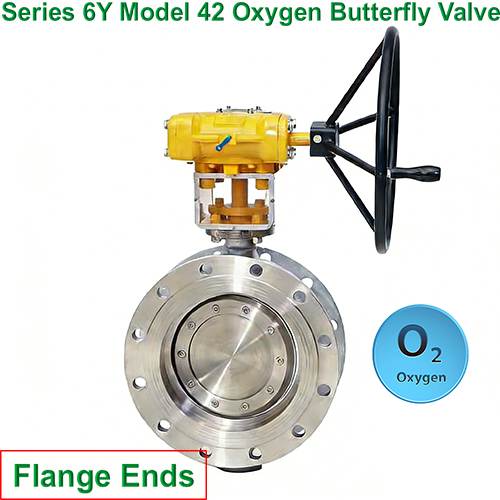
 Series 6Y Model 42 Oxygen Butterfly Valve
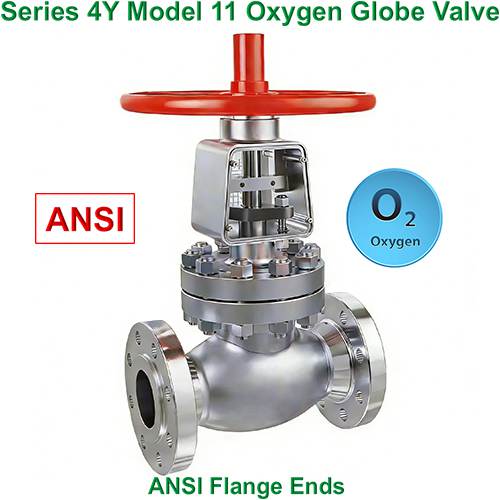 Series 4Y Model 11 Oxygen Globe Valve
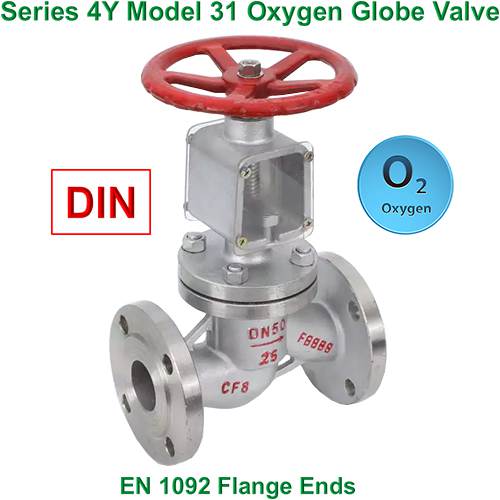 Series 4Y Model 31 Oxygen Globe Valve
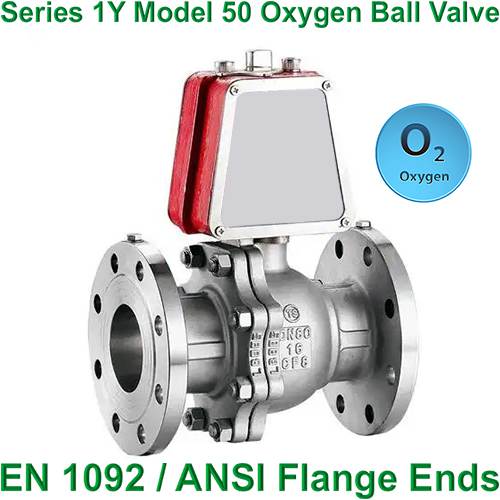 Series 1Y Model 50 Oxygen Ball Valve
1. Overview of Oxygen Pipeline Valves:
Large quantities of high-purity, high-pressure oxygen is required in steelmaking, steel cutting, and coal gasification processes in coal chemical industries. Because oxygen is combustible and explosive, specialized valves must be used in oxygen pipelines. The selection, structure, main materials, and treatment (degreasing, anti-static, oil-free, etc.) of specialized valves for oxygen pipelines involve a series of measures and requirements to ensure the safety and reliability of valves used in oxygen pipelines.
2. Valves Unsuitable for Oxygen Pipelines:
2.1 Gate valves are not suitable for oxygen pipelines because the friction between the gate and the valve seat during opening and closing generates sparks and static electricity, which is very dangerous.
2.2 Double-disc check valves (with two valve discs) should also not be used in oxygen pipelines because the collision of the two valve discs with the valve seat when closed generates sparks and static electricity, which is very dangerous. Furthermore, the sealing performance of this type of valve is unreliable.
3. Classification of Specialized Oxygen Pipeline Valves:
Based on their different applications, specialized valves for oxygen pipelines can be divided into shut-off valve and check valve.
3.1 Shut-off Valve:
3.1.1 A T-type globe valve may be selected when one of the following conditions is met:
① Nominal pressure ≤ PN40 (40 Bar), nominal size ≤ DN400 (16’’),
② Nominal pressure ≤ PN160 (160 Bar), nominal size ≤ DN250 (10’’),
This is because there is almost no friction between the valve disc and the valve seat of the globe valve. Once the valve disc contacts the valve seat, the valve is immediately shut off. Once the valve disc disengages from the valve seat, the valve opens.
3.1.2 A ball valve may be selected when one of the following conditions is met:
① Nominal pressure ≤ PN40 (40 Bar), nominal size > DN400 (16’’),
② Nominal pressure ≤ PN160 (160 Bar), nominal size > DN250 (10’’),
This is because if a gate valve is selected, the valve stem stress condition will be worsened due to the excessively large nominal size of the gate valve, making it difficult to open the valve.
3.2.1 Check Valve:
Check valves can be selected based on the following factors:
① When the nominal size is less than DN50, vertical or horizontal lift check valves are often selected;
② When the operating temperature does not exceed 200℃ and the nominal size is DN50~100, PTFE soft-seal swing check valves are often selected;
③ When the oxygen operating temperature exceeds 200℃, copper-sealed soft-seal swing check valves are often selected. Soft-seal swing check valves with PTFE or copper gaskets are safe because they do not generate sparks when the valve closes rapidly due to the metal valve disc directly striking or impacting the metal valve seat.
3.2.2 In recent years, the oxygen required for coal chemical production has reached temperatures of 350–450℃, placing even more stringent requirements on valves.
For such applications, a triple-eccentric swashplate check valve can also be selected. Its valve disc is a butterfly-shaped swashplate mounted on the valve shaft, and the valve seat is a specially designed floating, elastic, hard-seal metal structure, ensuring automatic alignment between the valve seat and the valve disc. The valve seat sealing surface is part of an oblique cone, and the sealing line formed by the valve seat and valve disc is an approximately elliptical curve. This curve's plane forms a second eccentric angle with the valve flow channel centerline. The axis of the valve disc's rotation is eccentric relative to the axis of the cone and also eccentric relative to the plane of the sealing line. When the pressure of the medium reaches its working pressure, the valve disc opens; when the pressure of the medium decreases, the valve disc automatically closes. Because the valve disc and metal seat have the characteristics of a triple-eccentric butterfly valve, they can quickly achieve a shock-free and collision-free seal with the valve seat without external force when closing. This valve also features high flow rate and low flow resistance.
4. Selection of Materials for Oxygen Pipeline Valves:
4.1 The main body material of valves used in high-pressure, high-purity oxygen pipelines at room temperature should be non-oxidizing, non-corrosive, and have the lowest possible carbon content to reduce sparks generated by friction between oxygen and carbon in the steel during high-speed flow. Therefore, high-quality austenitic stainless steel of low or ultra-low carbon grade is often selected, such as ASTM A351 CF8, CF3, CF8M, and CF3M, or ASTM A182 F304, F304L, F316, and F316L, etc.
4.2 When stainless steel castings are used for valves, pickling is necessary to remove impurities such as adhering sand and oxides from the valve cavity.
4.3 When oxygen is used at high purity and high pressure (CL≥900lb), to improve the flame retardant effect of the oxygen valve, the main body material of the valve should be a nickel-based alloy with a higher safety rating, such as Monel alloy (M35-1, Monel400, Monel...). K500), Inconel alloys (Inconel 600, Inconel 625) and cast Hastelloy C alloy (CW-6MC), etc.
5. Mandatory Processing for Oxygen Pipeline Valves:
5.1 Oxygen Pipeline Valves Must Be Degreased and Oil-Free:
Oxygen valves must not be contaminated with oil, as oil can cause fire or explosion in oxygen. Therefore, all parts must be degreased before valve assembly. After assembly and pressure testing, the valve passage must be degreased again. Oxygen valves must have dustproof and oil-free isolation protection devices and be clearly marked with an oil-free label. The valve stem should be protected from oil and dust contamination.
5.2 Oxygen Pipeline Valves Must Have Anti-static Devices:
Oxygen pipeline valves must have anti-static devices. During valve opening and closing, various frictions are unavoidable, generating static electricity. Static electricity can cause sparks, which is extremely dangerous.