
1. Freeman Valve's diaphragm valves offer the following advantages:
1.1 Reliable sealing and no external leakage: The diaphragm completely isolates the medium from moving parts such as the valve stem, eliminating external leakage. Suitable for toxic, flammable, explosive, and highly corrosive media.
1.2 Unobstructed flow path and low flow resistance: The smooth inner cavity, without dead corners, is less prone to scaling and clogging, making it suitable for high-viscosity, particulate, and slurry media.
1.3 Clean and hygienic: No stuffing box or accumulation chamber, easy to clean and sterile, meeting the requirements of food, pharmaceutical, and biopharmaceutical industries.
1.4 High corrosion resistance: Can be fitted with various diaphragms and linings such as rubber and PTFE, suitable for strong acids, strong alkalis, and strong oxidizers.
1.5 Simple structure and easy maintenance: Fewer parts, with the diaphragm being the only vulnerable component, making replacement convenient without disassembling the pipeline.
1.6 Suitable for vacuum conditions: The sealing structure is suitable for negative pressure and vacuum systems.
2. When selecting diaphragm valves, be aware of the following disadvantages:
2.1 Diaphragm valves are limited in pressure and temperature: Due to limitations in diaphragm material, they are not resistant to high temperatures and pressures, and are generally used in medium and low pressure applications.
2.2 Diaphragm valves generally have limited flow regulation accuracy: Their throttling characteristics are relatively quick-opening, making them unsuitable for high-precision continuous regulation.
2.3 Diaphragms are prone to wear: Frequent switching, media erosion, and temperature fluctuations will shorten diaphragm life.
2.4 The diameter of a diaphragm valve is inversely proportional to its pressure: Larger diameter diaphragm valves have lower pressure resistance, limiting selection.
3. Application areas of Freeman Valve diaphragm valves:
3.01 Strong corrosive media are the largest application area for diaphragm valves, particularly suitable for sulfuric acid, hydrochloric acid, nitric acid, caustic soda, sodium hypochlorite, hydrogen peroxide, phosphoric acid, brine, electroplating solutions, etc. These media are highly corrosive and contain a small amount of particles. 3.02 Diaphragm valves with internal linings are completely immune to corrosion from alkaline and chlorine media, have no external leakage, and offer the highest safety level.
3.02 Diaphragm valves are widely used in hydrometallurgy and phosphate chemical industries, such as with phosphoric acid, mineral slurry, and acidic leachates. These media are highly corrosive and contain solid particles. The smooth, dead-angle-free flow path of diaphragm valves, which are less prone to clogging and scaling, makes them widely used in this field.
3.03 Diaphragm valves are widely used in electroplating and pickling lines, such as with various pickling solutions and electroplating solutions. These media are highly corrosive and have a strong odor. Diaphragm valves have the advantage of zero external leakage, preventing acid mist from polluting the environment and harming personnel.
3.04 Diaphragm valves are widely used in wastewater and sludge treatment, especially with sludge, flocculants, and solid-liquid media, which are characterized by high viscosity, high fiber content, and easy clogging. However, straight-through diaphragm valves have virtually no clogging and are easy to maintain.
3.05 Diaphragm valves are widely used with ultrapure water media. In the semiconductor/integrated circuit industry, ultrapure water with a resistivity ≥18.2 MΩ is required. Diaphragm valves, with their characteristics of no precipitation, no metal contamination, and no dead zones, are ideally suited for ultrapure water media. Diaphragm valves are standard valves in FAB's ultrapure water systems.
3.06 Diaphragm valves are widely used in papermaking black liquor, white liquor, and pulp media. This is because these media are fibrous, easily entangled, and highly corrosive. However, diaphragm valves are non-jamming, have wide flow channels, and are more durable than butterfly valves and gate valves.
3.07 Diaphragm valves are widely used in mine tailings and slurry transportation. This is because mine tailings and slurry transportation involve high solid content and high abrasion, but lined diaphragm valves are erosion-resistant, easy to replace, and have low maintenance costs.
3.08 Diaphragm valves are widely used in vacuum systems and negative pressure equipment. This is because diaphragm valves have no stuffing box, excellent sealing performance, and can stably maintain a vacuum.
3.09 Diaphragm valves are widely used for toxic, flammable, and highly hazardous media. Examples include liquid chlorine, liquid ammonia, pesticide intermediates, and VOC liquids. Diaphragm valves are chosen for toxic, flammable, and highly hazardous media because they have absolutely zero external leakage. Therefore, diaphragm valves are called safety valves for high-risk media, and they are safer than ordinary shut-off valves.
3.10 Diaphragm valves are widely used in radioactive media/waste liquid systems. This is because diaphragm valves require less maintenance and have no external leakage. Furthermore, diaphragm valves are easy to operate remotely, diaphragm replacement is simple, and personnel have less contact with hazardous media.
4. Scenarios where diaphragm valves are not suitable:
4.1 High temperature and high pressure (generally >150℃, use with caution for PN25 and above);
4.2 High-precision flow regulation (regulation characteristics are too fast-opening, not as good as control valves);
4.3 Long-term use with high-temperature steam (diaphragm is prone to aging);
4.4 Strong abrasion and high-speed erosion (will quickly wear down the diaphragm).
5. Summary:
Diaphragm valves, with their zero external leakage, strong corrosion resistance, hygienic design with no dead angles, and simple structure, are the preferred valves for highly corrosive, clean, slurry, vacuum, and toxic media conditions, and are irreplaceable, especially in the chemical, pharmaceutical, food, water treatment, mining, and papermaking industries.
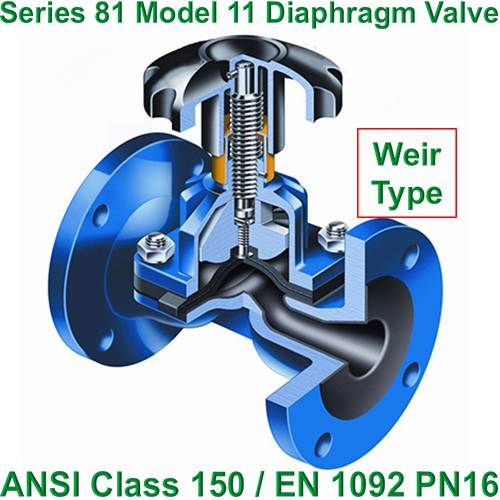 Diaphragm Valve
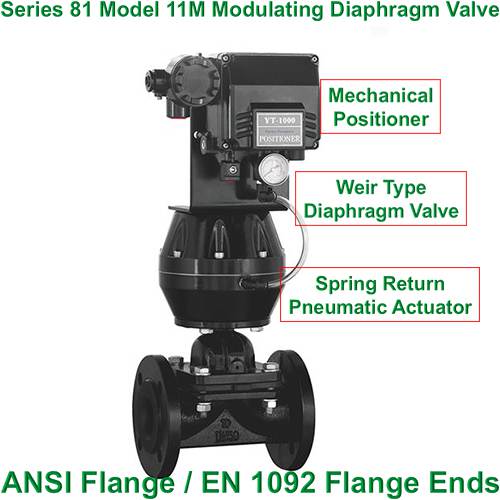 Modulating Diaphragm Valve