
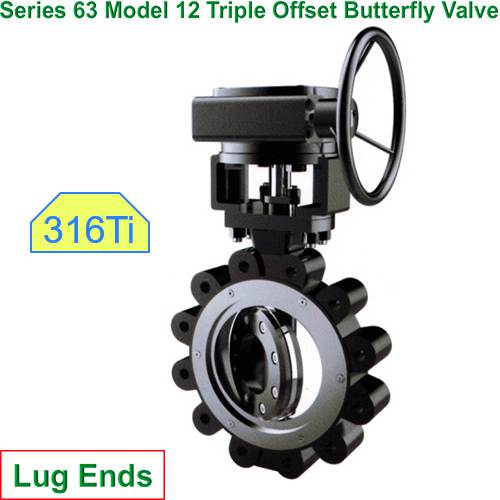
1. What is 316Ti?
316Ti is 316 stainless steel with a sufficient amount of titanium added (typically at least five times the carbon content). The role of titanium: Titanium is an element that bonds more readily with carbon than chromium. In molten steel, titanium preferentially combines with carbon to form stable titanium carbides. This "protects" the chromium, evenly distributing it within the austenite matrix, effectively preventing intergranular corrosion after welding or at high service temperatures.
2. Advantages of 316Ti butterfly valve produced by Freeman Valve:
The fundamental reason for using 316Ti butterfly valve is to address intergranular corrosion. The cause of intergranular corrosion: When ordinary 316 stainless steel butterfly valve is subjected to temperatures between 450°C and 850°C (for example, during welding or slow cooling), carbon combines with chromium, forming chromium carbides at grain boundaries. This depletes the chromium near the grain boundaries, creating chromium-depleted zones. This significantly reduces the corrosion resistance of the valve, and in certain corrosive media, corrosion along the grain boundaries can occur.
3. Key application areas of 316Ti butterfly valve produced by Freeman Valve:
3.1 316Ti butterfly valve produced by Freeman Valve have been widely used in the chemical and petrochemical industries. For example: (1) Heat exchangers, condensers: in contact with high-temperature and chloride-containing cooling water environments; (2) Reaction vessels, pipelines and storage tanks: equipment and piping systems used to handle hot organic acids (such as acetic acid) and inorganic acids (such as sulfuric acid and phosphoric acid); (3) Some components of flue gas desulfurization systems;
3.2 316Ti butterfly valve produced by Freeman Valve have been widely used in the energy and power industries. For example, they are used in components of power plants involving high-temperature and high-pressure steam, such as superheater pipes and boiler components, which require the material to have good creep resistance and intergranular corrosion resistance;
3.3 316Ti butterfly valve produced by Freeman Valve have been widely used in the fields of high-temperature heat treatment and metallurgical equipment. For example, they are used in the manufacture of furnace components, annealing furnace covers, and high-temperature fixtures, all of which operate within the sensitization temperature range for extended periods.
3.4 Freeman Valve's 316Ti butterfly valve is widely used in welded structural components in specific applications. They are ideal for applications where welding is required and post-weld solution annealing is not feasible (this is the best method to eliminate the intergranular corrosion tendency of 316, but it is impractical for large components), while also requiring excellent corrosion resistance after welding.
4. Summary
316Ti stainless steel butterfly valve are "specialty butterfly valve," high-performance austenitic stainless steel butterfly valve developed to address specific engineering challenges (welding and intergranular corrosion at high temperatures). Consider using 316Ti butterfly valve when your application meets all of the following conditions:
(1) The environment contains chlorides or other media that are susceptible to pitting/crevice corrosion;
(2) The equipment requires welding and cannot be heat treated as a whole after welding;
(3) The operating temperature of the equipment will be in the sensitization range of 450°C-850°C for a long time or periodically.
Design Standard of 316Ti Butterfly Valve:
Design Acc. to ASME B16.34 (ANSI Standard 316Ti Butterfly Valve);
Design Acc. to EN-12516-1/2 (EN Standard 316Ti Butterfly Valve, DIN Standard 316Ti Butterfly Valve).
Test Standard of 316Ti Butterfly Valve:
Test Acc. to API 598 (ANSI Standard 316Ti Butterfly Valve);
Test Acc. to EN 12266-1/2 (EN Standard 316Ti Butterfly Valve, DIN Standard 316Ti Butterfly Valve).
Surface Finishing of 316Ti Butterfly Valve:
All 316Ti Butterfly Valve surface is finely machined to achieve the required roughness and conforms to standard MSS SP-110.
Size of 316Ti Butterfly Valve:
From DN1/4’’ to 48’’ (ANSI Standard 316Ti Butterfly Valve);
From DN8 to DN1200 (EN Standard 316Ti Butterfly Valve, DIN Standard 316Ti Butterfly Valve).
Face to Face of 316Ti Butterfly Valve:
Face to Face Acc. to ASME B16.10 (ANSI Standard 316Ti Butterfly Valve);
Face to Face Acc. to EN 558-1 (EN Standard 316Ti Butterfly Valve, DIN Standard 316Ti Butterfly Valve).
Pressure Rating of 316Ti Butterfly Valve:
ANSI Class 150 316Ti Butterfly Valve (ANSI Standard 316Ti Butterfly Valve);
ANSI Class 300 316Ti Butterfly Valve (ANSI Standard 316Ti Butterfly Valve);
ANSI Class 600 316Ti Butterfly Valve (ANSI Standard 316Ti Butterfly Valve);
ANSI Class 800 316Ti Butterfly Valve (ANSI Standard 316Ti Butterfly Valve);
ANSI Class 900 316Ti Butterfly Valve (ANSI Standard 316Ti Butterfly Valve);
ANSI Class 1500 316Ti Butterfly Valve (ANSI Standard 316Ti Butterfly Valve);
ANSI Class 2500 316Ti Butterfly Valve (ANSI Standard 316Ti Butterfly Valve);
EN 1092 PN 16 316Ti Butterfly Valve (EN Standard 316Ti Butterfly Valve, DIN Standard 316Ti Butterfly Valve);
EN 1092 PN 25 316Ti Butterfly Valve (EN Standard 316Ti Butterfly Valve, DIN Standard 316Ti Butterfly Valve);
EN 1092 PN 40 316Ti Butterfly Valve (EN Standard 316Ti Butterfly Valve, DIN Standard 316Ti Butterfly Valve);
EN 1092 PN 63 316Ti Butterfly Valve (EN Standard 316Ti Butterfly Valve, DIN Standard 316Ti Butterfly Valve);
EN 1092 PN 100 316Ti Butterfly Valve (EN Standard 316Ti Butterfly Valve, DIN Standard 316Ti Butterfly Valve);
EN 1092 PN 160 316Ti Butterfly Valve (EN Standard 316Ti Butterfly Valve, DIN Standard 316Ti Butterfly Valve);
EN 1092 PN 250 316Ti Butterfly Valve (EN Standard 316Ti Butterfly Valve, DIN Standard 316Ti Butterfly Valve);
EN 1092 PN 320 316Ti Butterfly Valve (EN Standard 316Ti Butterfly Valve, DIN Standard 316Ti Butterfly Valve);
EN 1092 PN 400 316Ti Butterfly Valve (EN Standard 316Ti Butterfly Valve, DIN Standard 316Ti Butterfly Valve).
Working Temperature of 316Ti Butterfly Valve:
Please refer to the "Temperature and Pressure Curve of 316Ti Butterfly Valve" for temperature and pressure changes.
Ends Connection of 316Ti Butterfly Valve:
ANSI Flange Ends 316Ti Butterfly Valve;
ANSI Integral Flange Ends 316Ti Butterfly Valve;
ANSI Welded Flange Ends 316Ti Butterfly Valve;
Butt Weld (ASME B16.25) Ends 316Ti Butterfly Valve;
Butt Weld x ANSI Flange Ends 316Ti Butterfly Valve;
EN 1092 Flange Ends 316Ti Butterfly Valve;
EN 1092 Integral Flange Ends 316Ti Butterfly Valve;
EN 1092 Welded Flange Ends 316Ti Butterfly Valve;
Butt Weld (EN 12627) Ends 316Ti Butterfly Valve;
Butt Weld (ISO 1127) Ends 316Ti Butterfly Valve;
Butt Weld x EN 1092 Flange Ends 316Ti Butterfly Valve;
Male NPT (ASME B1.20.1) Ends 316Ti Butterfly Valve;
Male BSPP (ISO 228-1) Ends 316Ti Butterfly Valve;
Male BSPT (ISO 7-1) Ends 316Ti Butterfly Valve;
Male NPT x Female NPT Ends 316Ti Butterfly Valve;
Male BSPP x Female BSPP Ends 316Ti Butterfly Valve;
Male BSPT x Female BSPT Ends 316Ti Butterfly Valve;
Male NPT x Long Butt Weld (+100 mm) Ends 316Ti Butterfly Valve;
Male BSPP x Long Butt Weld (+100 mm) Ends 316Ti Butterfly Valve;
Male BSPT x Long Butt Weld (+100 mm) Ends 316Ti Butterfly Valve;
Female NPT (ASME B1.20.1) Ends 316Ti Butterfly Valve;
Female BSPP (ISO 228-1) Ends 316Ti Butterfly Valve;
Female BSPT (ISO 7-1) Ends 316Ti Butterfly Valve;
Socket Weld (ASME B16.11) Ends 316Ti Butterfly Valve;
Socket Weld (EN 12760) Ends 316Ti Butterfly Valve;
Female NPT x Socket Weld Ends 316Ti Butterfly Valve;
Female BSPP x Socket Weld Ends 316Ti Butterfly Valve;
Female BSPT x Socket Weld Ends 316Ti Butterfly Valve;
Butt Weld (ASME B16.25) Ends 316Ti Butterfly Valve;
Butt Weld (EN 12627) Ends 316Ti Butterfly Valve;
Female NPT x Butt Weld Ends 316Ti Butterfly Valve;
Female BSPP x Butt Weld Ends 316Ti Butterfly Valve;
Female BSPT x Butt Weld Ends 316Ti Butterfly Valve;
Female NPT x Long Butt Weld (+100 mm) Ends 316Ti Butterfly Valve;
Female BSPP x Long Butt Weld (+100 mm) Ends 316Ti Butterfly Valve;
Female BSPT x Long Butt Weld (+100 mm) Ends 316Ti Butterfly Valve;
Long Butt Weld (+100 mm Weld Stub) Ends 316Ti Butterfly Valve.
CE Marking of 316Ti Butterfly Valve:
CE Marking is Available to 316Ti Butterfly Valve with a Diameter of DN32 or Larger.
Chemical Composition of 316Ti Butterfly Valve:
For the Chemical Composition of 316Ti Butterfly Valve, please refer to EN 10204 Type 3.1 certificate.
Mechanical Properties of 316Ti Butterfly Valve:
For the Mechanical Properties of 316Ti Butterfly Valve, please refer to EN 10204 Type 3.1 certificate.
Certificate of 316Ti Butterfly Valve:
All 316Ti Butterfly Valve will be delivered with EN 10204 Type 3.1 Certificate.
Approvals of 316Ti Butterfly Valve:
MSS SP-110 Certified of 316Ti Butterfly Valve;
NACE MR 0175 Certified of 316Ti Butterfly Valve
API 607 Fire Safe Certified of 316Ti Butterfly Valve;
ISO 9001 Certified of 316Ti Butterfly Valve;
PED Certified of 316Ti Butterfly Valve.
Available Upon Request of 316Ti Butterfly Valve:
NACE MR0175 is available upon request of 316Ti Butterfly Valve;
ATEX is available upon request of 316Ti Butterfly Valve;
TA-LUFT is available upon request of 316Ti Butterfly Valve;
SIL is available upon request of 316Ti Butterfly Valve;
Degreasing is available upon request of 316Ti Butterfly Valve;
Fire Safe is available upon request of 316Ti Butterfly Valve;
Stem Extension is available upon request of 316Ti Butterfly Valve;
Double Block and Bleed is available upon request of 316Ti Butterfly Valve.
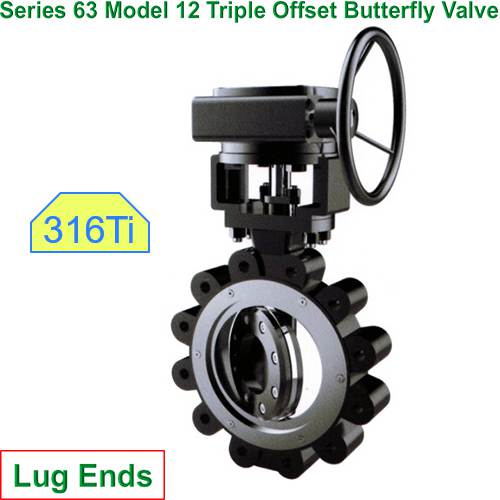 Lug Ends
 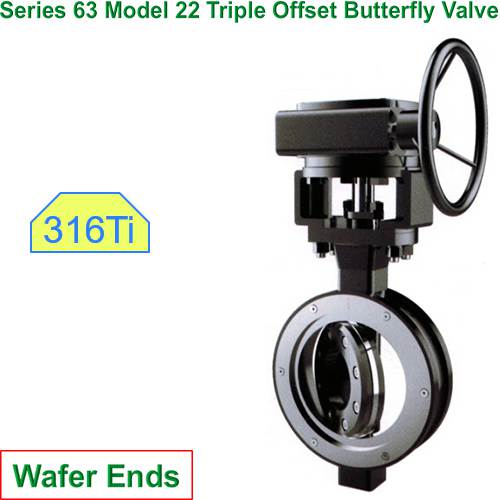 Wafer Ends
 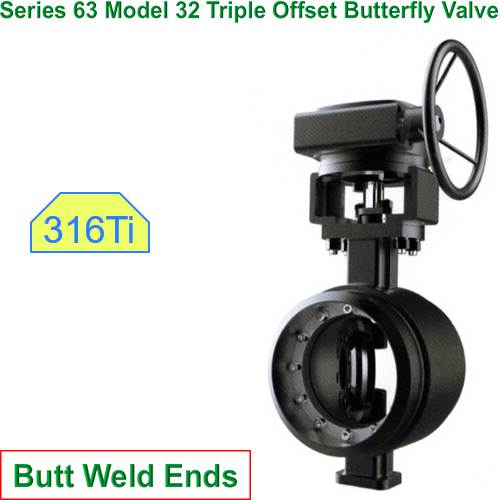 Butt Weld Ends
 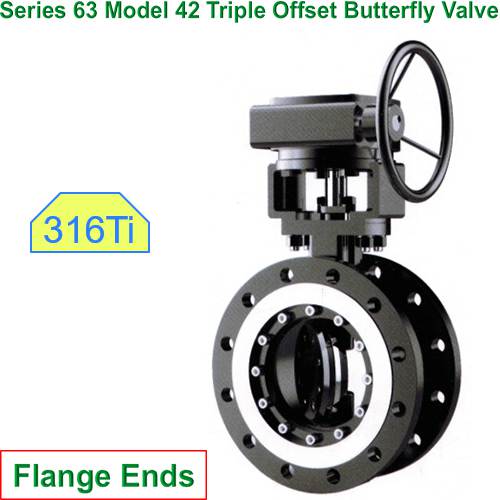 Double Flange Ends
 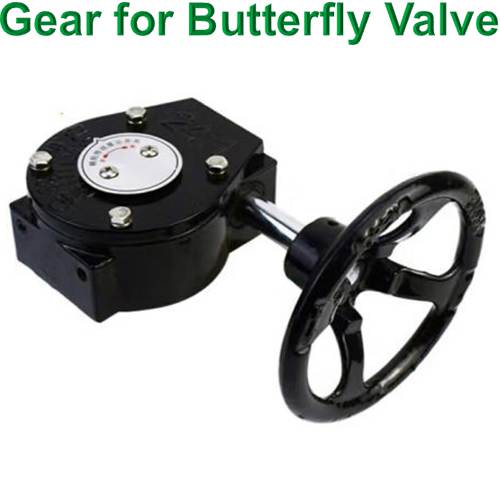 Gear Operation
 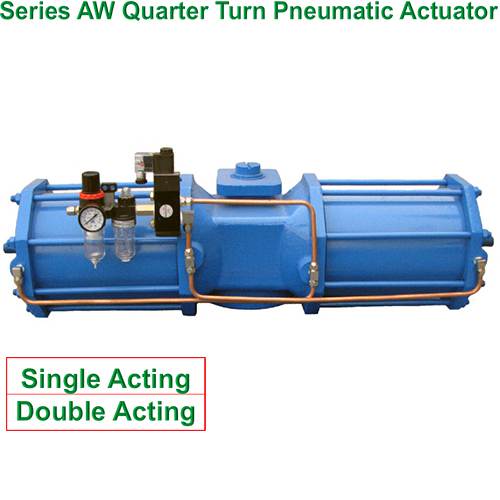 Series AW Pneumatic Actuator
  Series QF Electric Actuator
  Series QU Electric Actuator
 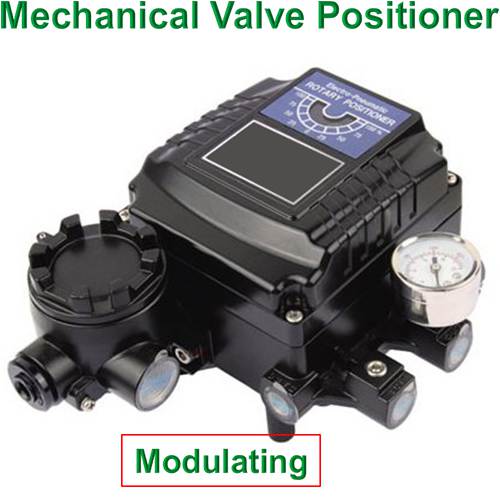 Mechanical Valve Positioner
 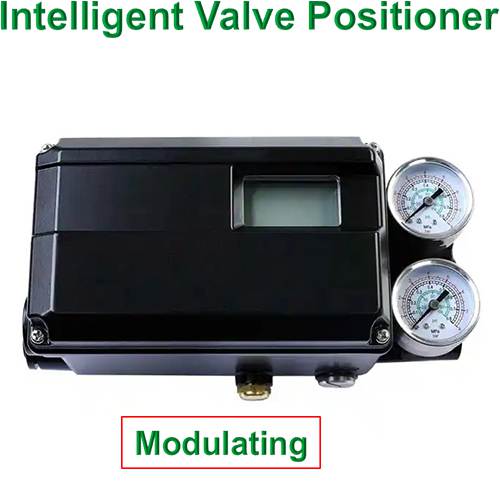 Intelligent Valve Positioner
  APL 210N Limit Switch Box
  APL 410N Limit Switch Box
  Solenoid Valve
  Solenoid Valve (ATEX)
  Solenoid Valve (ATEX + H2)