
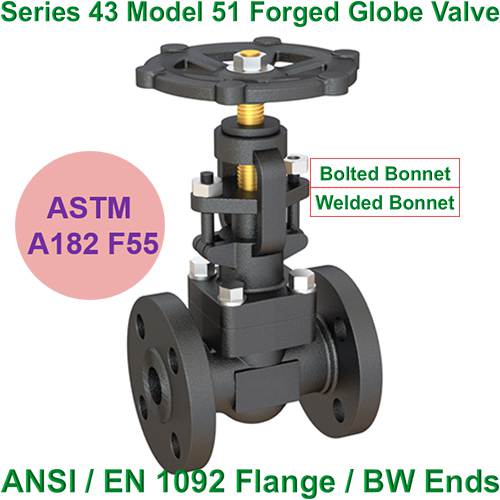
Comparison of ASTM A182 F53 (S32750) globe valve and ASTM A182 F55 (S32760) globe valve in Resistance to Chloride Ion Corrosion
In terms of resistance to chloride ion corrosion (mainly including pitting corrosion, crevice corrosion, and stress corrosion cracking, SCC), both ASTM A182 F55 (UNS S32760) and F53 (UNS S32750) globe valve belong to super duplex stainless steel and has a similar core property. However, there are key differences in alloy design and adaptability to actual working conditions. The following is an analysis of its advantages and disadvantages:
1. F53 (S32750) Valve: A Balanced High-Chlorine Corrosion-Resistant Solution
1.1 Core Advantages of F53 (S32750) Valve:
1.1.1 F53 (S32750) Valve boasts robust basic chlorine resistance: With a PREN ≥ 40, F53 (S32750) globe valve meet the requirements of super duplex steel thresholds, stably withstanding mainstream chloride ion environments such as seawater, conventional high-chlorine produced fluids from oil and gas, and industrial chloride solutions. Its resistance to pitting corrosion/crevice corrosion/SCC meets the requirements of most demanding operating conditions.
1.1.2 F53 (S32750) globe valve exhibit superior structural stability and long-term reliable operation: F53 (S32750) globe valve contain no complex alloying elements such as W and Cu. After solution treatment, their dual-phase microstructure is highly balanced. During long-term operation below 300℃, the risk of precipitation of harmful phases such as σ and χ phases is significantly lower than that of F55 (S32760) globe valve. Their corrosion resistance deteriorates more slowly under chloride ion environments, making them suitable for long-cycle equipment (such as subsea pipelines and chemical storage tanks).
1.2 Core disadvantages of F53 (S32750) globe valve:
1.2.1 Insufficient corrosion resistance under extreme combined operating conditions: Faced with combined conditions of high chloride + high temperature (>60℃) + acid (pH<4) and high chloride-containing particulate erosion, the passivation film repair speed is slower than that of F55 (S32760) globe valve, and the probability of localized pitting/crevice corrosion initiation is slightly higher.
1.2.2 F53 (S32750) valve lacks targeted alloy optimization: For acidic, high-chlorinated oil and gas media containing H₂S and CO₂, the F53 (S32750) valve was not directionally modified with Cu and W, resulting in a lower corrosion resistance limit compared to the F55 (S32760) valve.
2. F55 (S32760) Valve: A Dedicated Solution for Extreme High-Chlorine Conditions
2.1 Core Advantages of F55 (S32760) Valve:
2.1.1 F55 (S32760) Valve Offers Superior Corrosion Resistance in Extreme High-Chlorine Environments: The W element in the F55 (S32760) valve enhances the density of the passivation film, inhibiting the adsorption and penetration of chloride ions on the metal surface; the Cu element improves the self-healing ability of the passivation film in acidic chloride environments. In extreme conditions of high chlorine + high temperature + acidity, and high chlorine containing H₂S, its resistance to pitting/crevice corrosion is significantly better than F53.
2.1.2 F55 (S32760) globe valve offer greater adaptability to complex media: F55 (S32760) globe valve not only withstand pure chloride ion environments, but also exhibit comprehensive corrosion resistance to mixed media such as chloride + sulfide and chloride + organic acid (e.g., acidic gas field produced fluids, chemical chlor-alkali waste liquids), providing a wider range of operational adaptability.
2.1.3 F55 (S32760) globe valve has a higher upper limit for actual service PREN: In industrial production, the PREN value of F55 (S32760) globe valve often reaches 42~46, higher than the conventional 40~42 of F53 (S32750) globe valve. This results in a lower failure risk under conditions where chloride ion concentrations approach the critical value.
2.2 Core Disadvantages of F55 (S32760) Globe valve:
2.2.1 F55 (S32760) Globe valve Experience Decline in Corrosion Resistance During Long-Term High-Temperature Service: The presence of silicon dioxide (W) accelerates the precipitation of the σ phase at temperatures above 300℃, leading to an imbalance in the two-phase microstructure. This results in a rapid decrease in resistance to localized corrosion and SCC (sulfurized carbide corrosion) under chloride ion environments, making it unsuitable for long-term operation under medium-high temperature and high-chlorine conditions.
3. Selection Recommendations for Chloride Ion Corrosion Scenarios
3.1 Scenarios where F53 (S32750) globe valve is preferred:
3.1.1 Conventional high-chloride conditions: seawater transportation, seawater desalination, neutral chloride solutions (such as NaCl solutions), and conventional high-chloride produced fluids from oil and gas fields;
3.1.2 Long-term service conditions: high-chloride equipment below 300℃ with a design life of over 20 years (such as subsea pipelines and chemical fixed tube sheet heat exchangers);
3.1.3 Large-scale application scenarios: cost-sensitive, mass-produced high-chloride equipment (such as flanges, fittings, and valve bodies), where consistent corrosion resistance and cost-effectiveness is prioritized.
3.2 Scenarios where F55 (S32760) globe valve is preferred:
3.2.1 Extreme high-chlorine complex conditions: High chlorine + high temperature (60~100℃) + acidic (pH<4), acidic oil and gas media containing high chlorine H₂S/CO₂, mixed waste liquid of chloride + organic acid;
3.2.2 High-risk scenarios for localized corrosion: High-chlorine equipment with gaps and dead corners (such as pump bodies, internal flow channels of globe valve, and gap areas of heat exchanger tube sheets), where it is necessary to reduce the probability of pitting/crevice corrosion failure;
4. Summary
Both F53 (S32750) and F55 (S32760) globe valve are benchmark materials for chloride ion corrosion resistance among super duplex steels. The core difference lies in their adaptability to operating conditions: F53 (S32750) globe valve is a balanced choice, with solid basic chlorine resistance, stable structure, and controllable cost, covering 90% of applications. The above high-chlorine conditions represent the mainstream solution in the industry; the F55 (S32760) valve is an enhanced option for extreme conditions. It breaks through the upper limit of chlorine resistance through W and Cu alloying, making it suitable for harsh composite scenarios such as high chlorine + high temperature + acid, but it requires higher costs and process risks, and avoids long-term service at medium and high temperatures.
Design Standard of F55 Globe Valve (UNS S32760 Globe Valve):
Design Acc. to ASME B16.34 (ANSI Standard F55 Globe Valve (UNS S32760 Globe Valve));
Design Acc. to EN-12516-1/2 (EN Standard F55 Globe Valve (UNS S32760 Globe Valve), DIN Standard F55 Globe Valve (UNS S32760 Globe Valve)).
Test Standard of F55 Globe Valve (UNS S32760 Globe Valve):
Test Acc. to API 598 (ANSI Standard F55 Globe Valve (UNS S32760 Globe Valve));
Test Acc. to EN 12266-1/2 (EN Standard F55 Globe Valve (UNS S32760 Globe Valve), DIN Standard F55 Globe Valve (UNS S32760 Globe Valve)).
Surface Finishing of F55 Globe Valve (UNS S32760 Globe Valve):
All F55 Globe Valve (UNS S32760 Globe Valve) surface is finely machined to achieve the required roughness and conforms to standard MSS SP-110.
Size of F55 Globe Valve (UNS S32760 Globe Valve):
From DN1/4’’ to 48’’ (ANSI Standard F55 Globe Valve (UNS S32760 Globe Valve));
From DN8 to DN1200 (EN Standard F55 Globe Valve (UNS S32760 Globe Valve), DIN Standard F55 Globe Valve (UNS S32760 Globe Valve)).
Face to Face of F55 Globe Valve (UNS S32760 Globe Valve):
Face to Face Acc. to ASME B16.10 (ANSI Standard F55 Globe Valve (UNS S32760 Globe Valve));
Face to Face Acc. to EN 558-1 (EN Standard F55 Globe Valve (UNS S32760 Globe Valve), DIN Standard F55 Globe Valve (UNS S32760 Globe Valve)).
Pressure Rating of F55 Globe Valve (UNS S32760 Globe Valve):
ANSI Class 150 F55 Globe Valve (UNS S32760 Globe Valve) (ANSI Standard F55 Globe Valve (UNS S32760 Globe Valve));
ANSI Class 300 F55 Globe Valve (UNS S32760 Globe Valve) (ANSI Standard F55 Globe Valve (UNS S32760 Globe Valve));
ANSI Class 600 F55 Globe Valve (UNS S32760 Globe Valve) (ANSI Standard F55 Globe Valve (UNS S32760 Globe Valve));
ANSI Class 800 F55 Globe Valve (UNS S32760 Globe Valve) (ANSI Standard F55 Globe Valve (UNS S32760 Globe Valve));
ANSI Class 900 F55 Globe Valve (UNS S32760 Globe Valve) (ANSI Standard F55 Globe Valve (UNS S32760 Globe Valve));
ANSI Class 1500 F55 Globe Valve (UNS S32760 Globe Valve) (ANSI Standard F55 Globe Valve (UNS S32760 Globe Valve));
ANSI Class 2500 F55 Globe Valve (UNS S32760 Globe Valve) (ANSI Standard F55 Globe Valve (UNS S32760 Globe Valve));
EN 1092 PN 16 F55 Globe Valve (UNS S32760 Globe Valve) (EN Standard F55 Globe Valve (UNS S32760 Globe Valve), DIN Standard F55 Globe Valve (UNS S32760 Globe Valve));
EN 1092 PN 25 F55 Globe Valve (UNS S32760 Globe Valve) (EN Standard F55 Globe Valve (UNS S32760 Globe Valve), DIN Standard F55 Globe Valve (UNS S32760 Globe Valve));
EN 1092 PN 40 F55 Globe Valve (UNS S32760 Globe Valve) (EN Standard F55 Globe Valve (UNS S32760 Globe Valve), DIN Standard F55 Globe Valve (UNS S32760 Globe Valve));
EN 1092 PN 63 F55 Globe Valve (UNS S32760 Globe Valve) (EN Standard F55 Globe Valve (UNS S32760 Globe Valve), DIN Standard F55 Globe Valve (UNS S32760 Globe Valve));
EN 1092 PN 100 F55 Globe Valve (UNS S32760 Globe Valve) (EN Standard F55 Globe Valve (UNS S32760 Globe Valve), DIN Standard F55 Globe Valve (UNS S32760 Globe Valve));
EN 1092 PN 160 F55 Globe Valve (UNS S32760 Globe Valve) (EN Standard F55 Globe Valve (UNS S32760 Globe Valve), DIN Standard F55 Globe Valve (UNS S32760 Globe Valve));
EN 1092 PN 250 F55 Globe Valve (UNS S32760 Globe Valve) (EN Standard F55 Globe Valve (UNS S32760 Globe Valve), DIN Standard F55 Globe Valve (UNS S32760 Globe Valve));
EN 1092 PN 320 F55 Globe Valve (UNS S32760 Globe Valve) (EN Standard F55 Globe Valve (UNS S32760 Globe Valve), DIN Standard F55 Globe Valve (UNS S32760 Globe Valve));
EN 1092 PN 400 F55 Globe Valve (UNS S32760 Globe Valve) (EN Standard F55 Globe Valve (UNS S32760 Globe Valve), DIN Standard F55 Globe Valve (UNS S32760 Globe Valve)).
Working Temperature of F55 Globe Valve (UNS S32760 Globe Valve):
Please refer to the "Temperature and Pressure Curve of F55 Globe Valve (UNS S32760 Globe Valve)" for temperature and pressure changes.
Ends Connection of F55 Globe Valve (UNS S32760 Globe Valve):
ANSI Flange Ends F55 Globe Valve (UNS S32760 Globe Valve);
ANSI Integral Flange Ends F55 Globe Valve (UNS S32760 Globe Valve);
ANSI Welded Flange Ends F55 Globe Valve (UNS S32760 Globe Valve);
Butt Weld (ASME B16.25) Ends F55 Globe Valve (UNS S32760 Globe Valve);
Butt Weld x ANSI Flange Ends F55 Globe Valve (UNS S32760 Globe Valve);
EN 1092 Flange Ends F55 Globe Valve (UNS S32760 Globe Valve);
EN 1092 Integral Flange Ends F55 Globe Valve (UNS S32760 Globe Valve);
EN 1092 Welded Flange Ends F55 Globe Valve (UNS S32760 Globe Valve);
Butt Weld (EN 12627) Ends F55 Globe Valve (UNS S32760 Globe Valve);
Butt Weld (ISO 1127) Ends F55 Globe Valve (UNS S32760 Globe Valve);
Butt Weld x EN 1092 Flange Ends F55 Globe Valve (UNS S32760 Globe Valve);
Male NPT (ASME B1.20.1) Ends F55 Globe Valve (UNS S32760 Globe Valve);
Male BSPP (ISO 228-1) Ends F55 Globe Valve (UNS S32760 Globe Valve);
Male BSPT (ISO 7-1) Ends F55 Globe Valve (UNS S32760 Globe Valve);
Male NPT x Female NPT Ends F55 Globe Valve (UNS S32760 Globe Valve);
Male BSPP x Female BSPP Ends F55 Globe Valve (UNS S32760 Globe Valve);
Male BSPT x Female BSPT Ends F55 Globe Valve (UNS S32760 Globe Valve);
Male NPT x Long Butt Weld (+100 mm) Ends F55 Globe Valve (UNS S32760 Globe Valve);
Male BSPP x Long Butt Weld (+100 mm) Ends F55 Globe Valve (UNS S32760 Globe Valve);
Male BSPT x Long Butt Weld (+100 mm) Ends F55 Globe Valve (UNS S32760 Globe Valve);
Female NPT (ASME B1.20.1) Ends F55 Globe Valve (UNS S32760 Globe Valve);
Female BSPP (ISO 228-1) Ends F55 Globe Valve (UNS S32760 Globe Valve);
Female BSPT (ISO 7-1) Ends F55 Globe Valve (UNS S32760 Globe Valve);
Socket Weld (ASME B16.11) Ends F55 Globe Valve (UNS S32760 Globe Valve);
Socket Weld (EN 12760) Ends F55 Globe Valve (UNS S32760 Globe Valve);
Female NPT x Socket Weld Ends F55 Globe Valve (UNS S32760 Globe Valve);
Female BSPP x Socket Weld Ends F55 Globe Valve (UNS S32760 Globe Valve);
Female BSPT x Socket Weld Ends F55 Globe Valve (UNS S32760 Globe Valve);
Butt Weld (ASME B16.25) Ends F55 Globe Valve (UNS S32760 Globe Valve);
Butt Weld (EN 12627) Ends F55 Globe Valve (UNS S32760 Globe Valve);
Female NPT x Butt Weld Ends F55 Globe Valve (UNS S32760 Globe Valve);
Female BSPP x Butt Weld Ends F55 Globe Valve (UNS S32760 Globe Valve);
Female BSPT x Butt Weld Ends F55 Globe Valve (UNS S32760 Globe Valve);
Female NPT x Long Butt Weld (+100 mm) Ends F55 Globe Valve (UNS S32760 Globe Valve);
Female BSPP x Long Butt Weld (+100 mm) Ends F55 Globe Valve (UNS S32760 Globe Valve);
Female BSPT x Long Butt Weld (+100 mm) Ends F55 Globe Valve (UNS S32760 Globe Valve);
Long Butt Weld (+100 mm Weld Stub) Ends F55 Globe Valve (UNS S32760 Globe Valve).
CE Marking of F55 Globe Valve (UNS S32760 Globe Valve):
CE Marking is Available to F55 Globe Valve (UNS S32760 Globe Valve) with a Diameter of DN32 or Larger.
Chemical Composition of F55 Globe Valve (UNS S32760 Globe Valve):
For the Chemical Composition of F55 Globe Valve (UNS S32760 Globe Valve), please refer to EN 10204 Type 3.1 certificate.
Mechanical Properties of F55 Globe Valve (UNS S32760 Globe Valve):
For the Mechanical Properties of F55 Globe Valve (UNS S32760 Globe Valve), please refer to EN 10204 Type 3.1 certificate.
Certificate of F55 Globe Valve (UNS S32760 Globe Valve):
All F55 Globe Valve (UNS S32760 Globe Valve) will be delivered with EN 10204 Type 3.1 Certificate.
Approvals of F55 Globe Valve (UNS S32760 Globe Valve):
MSS SP-110 Certified of F55 Globe Valve (UNS S32760 Globe Valve);
NACE MR 0175 Certified of F55 Globe Valve (UNS S32760 Globe Valve)
API 607 Fire Safe Certified of F55 Globe Valve (UNS S32760 Globe Valve);
ISO 9001 Certified of F55 Globe Valve (UNS S32760 Globe Valve);
PED Certified of F55 Globe Valve (UNS S32760 Globe Valve).
Available Upon Request of F55 Globe Valve (UNS S32760 Globe Valve):
NACE MR0175 is available upon request of F55 Globe Valve (UNS S32760 Globe Valve);
ATEX is available upon request of F55 Globe Valve (UNS S32760 Globe Valve);
TA-LUFT is available upon request of F55 Globe Valve (UNS S32760 Globe Valve);
SIL is available upon request of F55 Globe Valve (UNS S32760 Globe Valve);
Degreasing is available upon request of F55 Globe Valve (UNS S32760 Globe Valve);
Fire Safe is available upon request of F55 Globe Valve (UNS S32760 Globe Valve);
Stem Extension is available upon request of F55 Globe Valve (UNS S32760 Globe Valve);
Double Block and Bleed is available upon request of F55 Globe Valve (UNS S32760 Globe Valve).
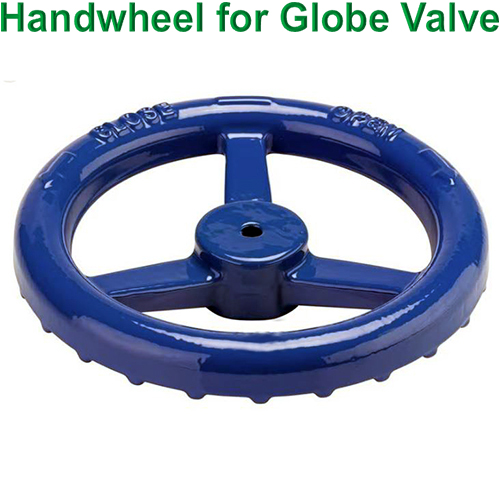 Handwheel Operation
 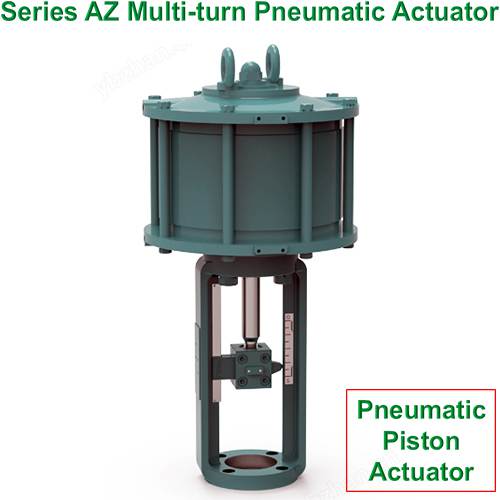 Series AZ Pneumatic Piston Actuator
 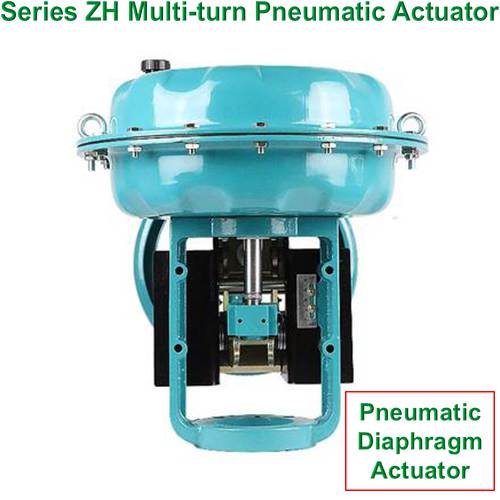 Series ZH Multi-turn Pneumatic Actuator
 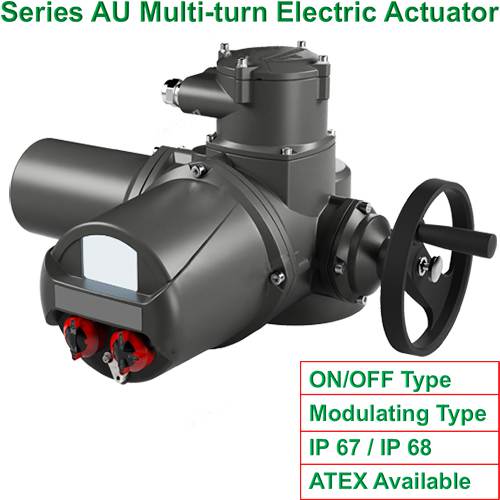 Series AU Electric Actuator
 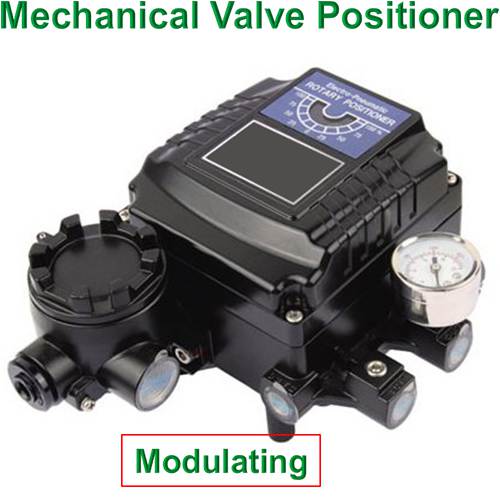 Mechanical Valve Positioner
 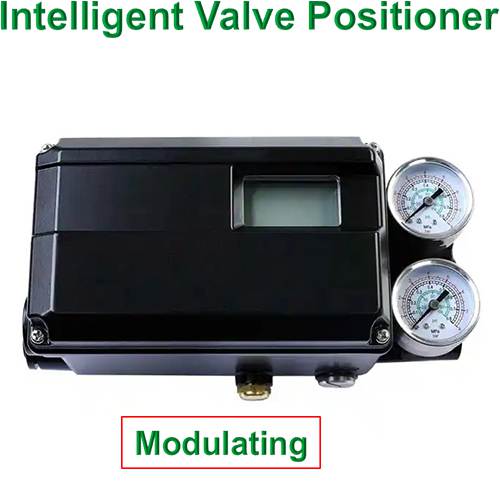 Intelligent Valve Positioner
  APL 210N Limit Switch Box
  APL 410N Limit Switch Box
  Solenoid Valve
  Solenoid Valve (ATEX)
  Solenoid Valve (ATEX + H2)