
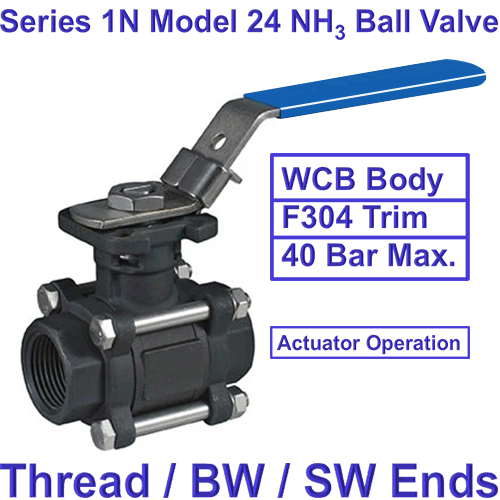
NH₃ Medium Material Selection Tips:
1. Room temperature and anhydrous NH₃ liquid, i.e., pure NH₃ (NH₃ temperature < 150℃): Carbon steel is recommended;
2. Room temperature and hydrated NH₃ liquid (NH₃ temperature < 200℃): Stainless steel 316 is recommended;
3. Room temperature and hydrated NH₃ gas (NH₃ temperature < 200℃): Stainless steel 316 is recommended;
4. Dry NH₃ without moisture and oxygen (NH₃ temperature in the 200-300℃ range): Alloy steel F11 is recommended;
5. Dry NH₃ without moisture and oxygen (NH₃ temperature in the 300-450℃ range): Alloy steel F22 is recommended;
6. Dry NH₃ (NH₃ temperature greater than 450℃): Inconel 625 is recommended;
6. 7. Dry NH₃ containing impurities: Inconel 625 is recommended;
8. Wet NH₃ (NH₃ temperature between 200-450℃): Inconel 625 is recommended;
9. Wet NH₃ (NH₃ temperature greater than 450℃): Ceramic-lined valves are recommended.
Note: Copper, brass, and copper alloys are strictly prohibited for use with NH₃ medium, as they will cause rapid ammonia-induced stress corrosion cracking.
1. NH3 Refrigerant Characteristics and Freeman Valve's Corresponding Solutions
NH3 (ammonia, R717), a commonly used industrial refrigerant, has inherent characteristics of toxicity, flammability, explosiveness, and corrosiveness, placing extremely high demands on the sealing, materials, and safety design of system valves. Addressing these core pain points, Freeman Valve has specifically optimized its product design to precisely match NH3 refrigerant application scenarios. Specific solutions are as follows:
1.1 NH3 refrigerant has moderate toxicity, which is the primary safety hazard that needs to be controlled in its application—when the concentration of NH3 in the air exceeds 300 ppm, it will strongly irritate the human respiratory tract and cause discomfort; when the concentration reaches 0.5% (volume fraction) or higher, it will endanger human life. As a key sealing component of the refrigerant system, leakage at the valve stem is one of the main risk points. To address this, Freeman Valve's NH3-specific valves feature a triple-seal design, with sealing performance strictly adhering to TA Luft (ISO 15848-1) standards. This effectively prevents NH3 refrigerant from escaping through the valve stem, mitigating the toxic hazards caused by refrigerant leaks at the source and ensuring personnel and system safety.
1.2 NH3 refrigerant also poses a significant flammability and explosion risk, with a flammability range of 15%-28% (volume fraction). Within this concentration range, it can explode upon contact with open flames, high temperatures, or static sparks. Therefore, NH3 refrigeration systems have extremely stringent requirements for sealing, on-site ventilation, and safety management. To address this challenge, Freeman Valve strengthens safety in two ways: First, all NH3 valves undergo professional degreasing treatment to prevent residual grease inside the valves from contacting the NH3 refrigerant and causing safety hazards, effectively reducing the risk of flammability and explosion. Second, based on customer needs, Freeman Valve can provide NH3-specific valves with fire-resistant designs to further enhance system reliability under extreme conditions and adapt to high-safety-standard application scenarios.
1.3 Furthermore, NH3 refrigerant is highly corrosive, especially to copper and most copper alloys. If the valve material is not properly selected, corrosion and damage can easily occur, leading to refrigerant leakage and valve failure. This not only affects the normal operation of the system but also increases maintenance costs and safety risks. Therefore, Freeman Valve's NH3 valves are made of ammonia-resistant materials such as carbon steel or stainless steel. After rigorous material testing and processing, they can withstand the corrosion of NH3 refrigerant for a long time, ensuring stable valve lifespan and sealing performance, meeting the long-term operating requirements of NH3 systems, and reducing subsequent maintenance costs.
2. Key Application Areas of Freeman Valve's NH3 Valves:
2.1 Freeman Valve's NH3 valves are widely used in the food processing and cold chain industries. Examples include meat/seafood/dairy processing plants, quick-freezing tunnels, large cold storage facilities, and cold chain logistics warehouses. Because NH3 refrigerant has high refrigeration efficiency, it is suitable for large-scale low-temperature requirements, ensuring food freshness and safety, and has low long-term operating costs.
2.2 Freeman Valve's NH3 valves are widely used in the beer and beverage industry. Specific applications include: 1. Brewery fermentation tank cooling and low-temperature processes in beverage production lines. NH3 refrigerant provides precise temperature control, meeting process requirements for temperature stability and aligning with environmental and cost control needs.
2.3 Freeman Valve's NH3 valves are widely used in the chemical and pharmaceutical industries. Examples include: low-temperature reactor cooling, gas liquefaction, and pharmaceutical freeze-drying. NH3 refrigerant is suitable for medium- and low-temperature processes, has good compatibility with chemical media, supports stringent temperature control, and meets industry environmental standards.
2.4 Freeman Valve's NH3 valves are widely used in the fisheries and ocean shipping industries. Examples include: refrigerated tanks on ocean-going fishing vessels and quick-freezing equipment for aquatic products. NH3 refrigerant is suitable for high-load refrigeration demands at sea, leaks are easily detected, and safety management on board is convenient.
2.6 Freeman Valve's NH3 valves are widely used in industrial-grade cryogenic systems. Examples include: ultra-low temperature testing equipment, LNG refrigeration systems, and ultra-low temperature systems cascaded with CO₂. NH3 refrigerant can achieve refrigeration below -50°C, its thermodynamic properties are adapted to extreme conditions, and it is both environmentally friendly and highly efficient.
 Series RT Pneumatic Actuator (A)
 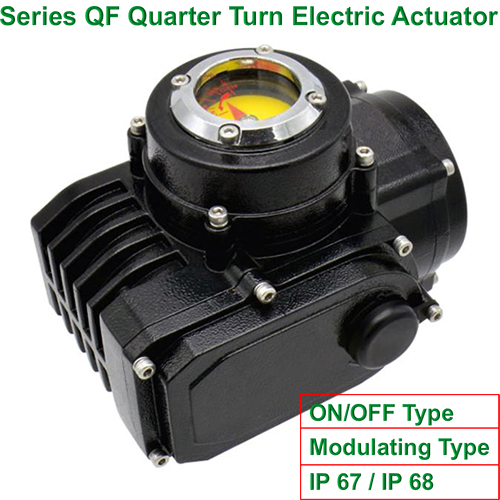 Series QF Electric Actuator
 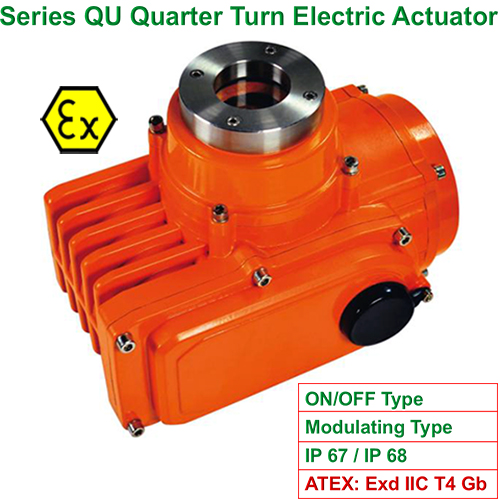 Series QU Electric Actuator
 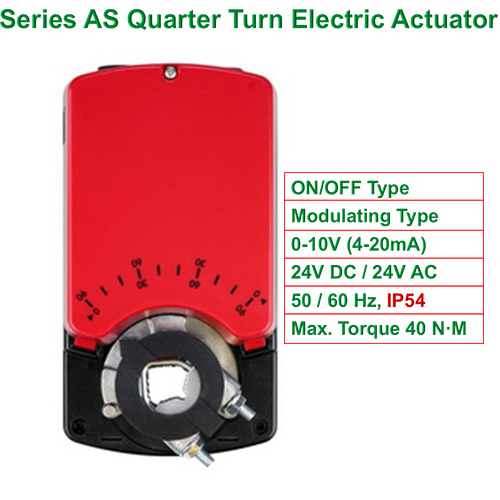 Series AS Electric Actuator (1/4'' - 1'')
 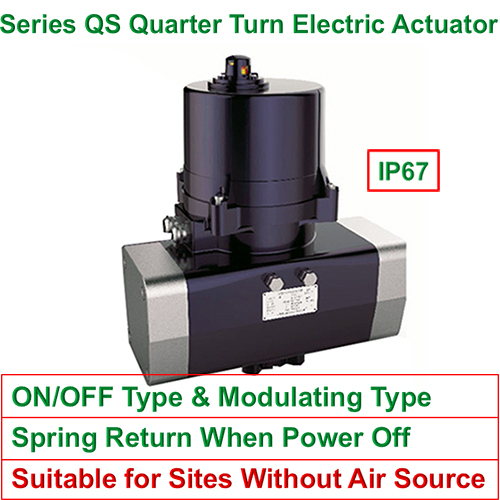 Series QS Electric Actuator