Performance, Precautions, and Differences from Freeman Valve's ASTM A182 F51 bellow gate valve
ASTM A182 F51, a forged version of 2205 duplex stainless steel, is an ideal bellow gate valve material for chloride-containing environments due to its excellent resistance to chloride ion corrosion. The following focuses on the core advantages and usage precautions of this model of bellow gate valve manufactured by Freeman Valve.
1. Core Advantages of Freeman Valve's ASTM A182 F51 bellow gate valve in Resisting Chloride Ion Corrosion
1.1 Excellent Resistance to Chloride Stress Corrosion Cracking (SCC)
This is the most crucial advantage of this bellow gate valve model and the key reason why it replaces traditional F316L bellow gate valve. Mechanistically, ASTM A182 F51 employs a ferrite (F) + austenite (A) duplex microstructure, completely breaking the SCC sensitivity mechanism of pure austenitic stainless steel under the coupling effect of "chloride ions + tensile stress." The ferrite phase effectively inhibits crack propagation, significantly improving the bellow gate valve's SCC threshold.
In practical applications, this bellow gate valve exhibits significantly superior corrosion resistance compared to austenitic stainless-steel castings such as F304 and F316L in typical SCC environments, including seawater, brine, and chlorinated process media. It can maintain stable operation for extended periods under conditions where traditional austenitic stainless-steel bellow gate valve frequently fail, greatly improving equipment reliability.
1.2 Excellent Resistance to Pitting and Crevice Corrosion
This advantage stems from its well-designed alloy composition: ASTM A182 F51 contains approximately 22% chromium (Cr), 3% molybdenum (Mo), and 0.10–0.30% nitrogen (N), achieving a pitting corrosion resistance equivalent (PREN) of 32–38, far exceeding that of F316L (PREN≈25).
The synergistic effect of Mo and N is particularly crucial, giving it extremely strong resistance to pitting and crevice corrosion in neutral and weakly acidic media containing chloride ions (such as seawater and chloride solutions). Especially suitable for complex casting structures with gaps, easily deposited media, and localized stagnation in bellow gate valve internal flow channels and flange sealing surfaces, reducing the risk of localized corrosion failure at its source.
1.3 Excellent Resistance to Uniform Corrosion
In neutral, weakly alkaline, and weakly acidic environments containing chloride ions, the high Cr content in ASTM A182 F51 bellow gate valve forms a stable passivation film with an extremely low overall uniform corrosion rate, far superior to ordinary carbon steel and low-alloy cast iron bellow gate valve. This effectively resists the overall erosion of the bellow gate valve body by chloride ions, extending the bellow gate valve's service life.
2. Precautions for Using ASTM A182 F51 bellow gate valve
2.1 Temperature Limits
The recommended long-term operating temperature for this bellow gate valve is ≤300℃. Exceeding this temperature will significantly reduce the stability of its duplex structure, accelerate the precipitation of intermetallic phases, and significantly deteriorate its resistance to chloride ion corrosion. Especially under the combined conditions of "high temperature + high chloride," its corrosion resistance is far inferior to that of super duplex steel castings (such as ASTM A995 5A/6A) or nickel-based alloys, requiring material upgrades based on the operating conditions.
2.2 Concentration/Pressure Limitations
Use in extreme corrosive conditions should be avoided: Environments with extremely high concentrations of chloride ions, high temperature and pressure, or strong acidic chlorides (such as high-temperature concentrated hydrochloric acid, high-chlorine and high-pressure oil and gas) should be avoided. ASTM A182 F51 bellow gate valve have insufficient resistance to pitting corrosion and SCC, and are prone to rapid corrosion failure. Appropriate selection based on operating conditions is necessary.
3. Core Differences Between ASTM A182 F51 bellow gate valve and ASTM A995 Gr. 4A bellow gate valve
Both belong to the 2205 duplex stainless steel system. The core difference lies only in the manufacturing process and corresponding standards, as follows:
• ASTM A995 Gr. 4A: Follows the ASTM A995 standard and is a cast version of 2205 duplex stainless steel, mainly used for bellow gate valve components with complex structures (such as bellow gate valve bodies and covers).
• ASTM A182 F51: Follows the ASTM A182 standard and is a forged version of 2205 duplex stainless steel, emphasizing high strength and consistent performance. It is mostly used for bellow gate valve forgings with higher mechanical performance requirements.

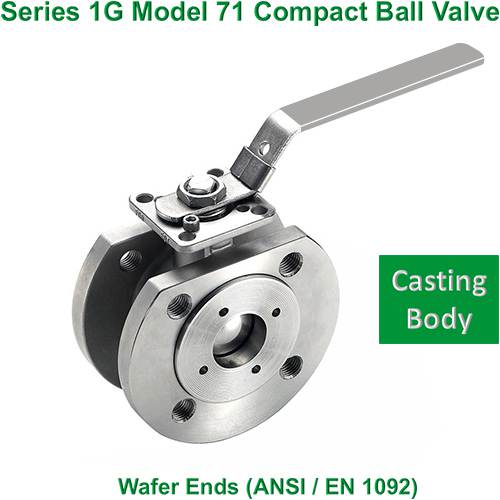
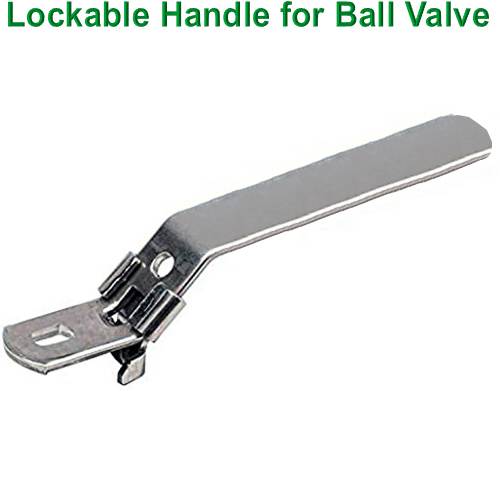 Level Operation
 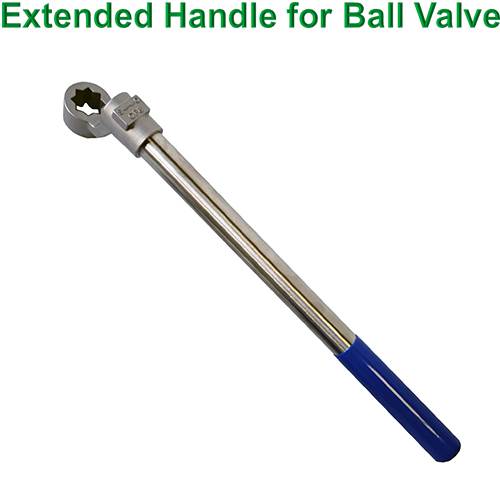 Long Handle Operation
  Series RT Pneumatic Actuator (A)
  Series RT Pneumatic Actuator (M)
  Series RT Pneumatic Actuator (S)
  Series QF Electric Actuator
  Series QU Electric Actuator
  APL 210N Limit Switch Box
  APL 410N Limit Switch Box
  Solenoid Valve
  Solenoid Valve (ATEX)
  Solenoid Valve (ATEX + H2)