
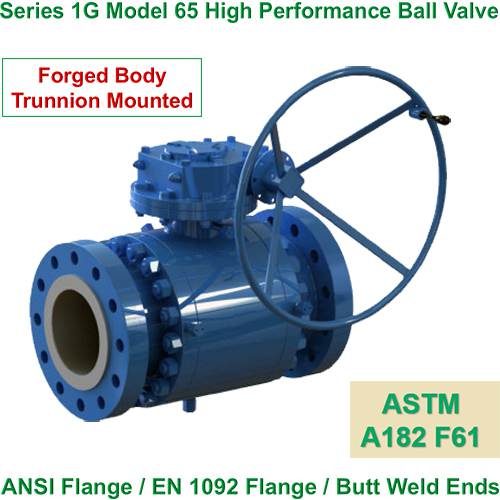
ASTM A182 F61 is a super duplex stainless steel forging grade, with a two-phase microstructure (austenitic + ferritic) and a PREN > 40. Furthermore, this material contains copper, which enhances its corrosion resistance in low-concentration acidic media.
1. Key Advantages of Freeman Valve's ASTM A182 F61 Valves in Resisting Chloride Ion Corrosion
1.1 High Yield Strength: Freeman Valve's ASTM A182 F61 valves boast a yield strength ≥ 550 MPa. This advantage allows for reduced valve wall thickness, enabling lightweight designs without sacrificing safety.
1.2 Excellent Pitting Corrosion Resistance: Freeman Valve's ASTM A182 F61 valves have high chromium and molybdenum content, resulting in a critical pitting temperature exceeding 50°C in harsh environments.
1.3 Outstanding Resistance to Acidic Media: Freeman Valve's ASTM A182 F61 valves contain up to 2.5% copper, effectively enhancing resistance to strong reducing acids such as sulfuric acid, phosphoric acid, and nitric acid.
1.4 Strong Resistance to Stress Corrosion Cracking: Freeman Valve's ASTM A182 F61 valves exhibit excellent resistance to chloride-induced stress corrosion cracking and crevice corrosion, common in marine and seawater applications.
1.5 Suitable for Acidic Oil and Gas Environments Containing H₂S and Chlorides: Freeman Valve's ASTM A182 F61 valves meet the requirements of NACE MR0175, making them ideal for use in acidic oil and gas environments containing H₂S and chlorides.
2. Key Application Areas of ASTM A182 F61 Valves
2.1 Freeman Valve's ASTM A182 F61 valves have been widely used in marine and seawater engineering. Examples include high-pressure valves for seawater desalination, seawater transmission pipelines, seawater cooling systems for offshore platforms, fire-fighting seawater pipelines, and shallow seabed pipelines.
2.2 Freeman Valve's ASTM A182 F61 valves have been widely used in acidic oil and gas environments. Examples include oil and gas wellhead valves and produced fluid treatment equipment; chlorine-containing and trace H₂S gathering and transportation pipelines; oil-gas-water treatment separators and heat exchangers (NACE acidic conditions);
2.3 Freeman Valve's ASTM A82 F61 valves are widely used in the chemical industry (chlorine-containing + dilute acid mixed systems, F61's core advantage). Examples include dilute sulfuric acid, phosphoric acid, and chloride salt media reactors; pulp and paper cooking and bleaching equipment (chlorine-containing, organic acid-containing); salt chemical industry, brine processing, and lithium extraction pipelines and valves from salt lakes.
2.4 Freeman Valve's ASTM A82 F61 valves are widely used in the power environmental desulfurization field. Examples include power plant flue gas desulfurization slurry valves and circulation pipelines (chloride ion + acidic gypsum slurry, coexistence of scouring and corrosion).
2.5 Freeman Valve's ASTM A82 F61 valves are widely used in municipal high-salinity wastewater treatment and industrial wastewater treatment (high-pressure pipelines).
3. Conclusion
3.1 Operating conditions for which ASTM A182 F61 valves are preferred:
3.1.1 Chloride environment + co-existence of dilute sulfuric acid + requirement of high strength and erosion;
3.1.2 Chloride environment + co-existence of organic acids + requirement of high strength and erosion.
3.2 Operating conditions for which ASTM A182 F61 valves are not recommended:
3.2.1 Operating temperature consistently above 300℃;
3.2.2 High-concentration, non-oxidizing reducing acids (concentrated hydrochloric acid, concentrated hydrofluoric acid, concentrated sulfurous acid, sulfur dioxide aqueous solution, high-concentration formic acid, acetic acid, concentrated phosphoric acid);
3.2.3 Extremely low temperature conditions;
3.2.4 For simple seawater media, 2507 can be evaluated;
3.2.5 For simple neutral chloride media, 2205 can be compared.
Design Standard of F61 Trunnion Mounted Ball Valve (UNS S32550 Trunnion Mounted Ball Valve, EN 1.4507 Trunnion Mounted Ball Valve):
Design Acc. to ASME B16.34 (ANSI Standard F61 Trunnion Mounted Ball Valve (UNS S32550 Trunnion Mounted Ball Valve, EN 1.4507 Trunnion Mounted Ball Valve));
Design Acc. to EN-12516-1/2 (EN Standard F61 Trunnion Mounted Ball Valve (UNS S32550 Trunnion Mounted Ball Valve, EN 1.4507 Trunnion Mounted Ball Valve), DIN Standard F61 Trunnion Mounted Ball Valve (UNS S32550 Trunnion Mounted Ball Valve, EN 1.4507 Trunnion Mounted Ball Valve)).
Test Standard of F61 Trunnion Mounted Ball Valve (UNS S32550 Trunnion Mounted Ball Valve, EN 1.4507 Trunnion Mounted Ball Valve):
Test Acc. to API 598 (ANSI Standard F61 Trunnion Mounted Ball Valve (UNS S32550 Trunnion Mounted Ball Valve, EN 1.4507 Trunnion Mounted Ball Valve));
Test Acc. to EN 12266-1/2 (EN Standard F61 Trunnion Mounted Ball Valve (UNS S32550 Trunnion Mounted Ball Valve, EN 1.4507 Trunnion Mounted Ball Valve), DIN Standard F61 Trunnion Mounted Ball Valve (UNS S32550 Trunnion Mounted Ball Valve, EN 1.4507 Trunnion Mounted Ball Valve)).
Surface Finishing of F61 Trunnion Mounted Ball Valve (UNS S32550 Trunnion Mounted Ball Valve, EN 1.4507 Trunnion Mounted Ball Valve):
All F61 Trunnion Mounted Ball Valve (UNS S32550 Trunnion Mounted Ball Valve, EN 1.4507 Trunnion Mounted Ball Valve) surface is finely machined to achieve the required roughness and conforms to standard MSS SP-110.
Size of F61 Trunnion Mounted Ball Valve (UNS S32550 Trunnion Mounted Ball Valve, EN 1.4507 Trunnion Mounted Ball Valve):
From DN1/4’’ to 48’’ (ANSI Standard F61 Trunnion Mounted Ball Valve (UNS S32550 Trunnion Mounted Ball Valve, EN 1.4507 Trunnion Mounted Ball Valve));
From DN8 to DN1200 (EN Standard F61 Trunnion Mounted Ball Valve (UNS S32550 Trunnion Mounted Ball Valve, EN 1.4507 Trunnion Mounted Ball Valve), DIN Standard F61 Trunnion Mounted Ball Valve (UNS S32550 Trunnion Mounted Ball Valve, EN 1.4507 Trunnion Mounted Ball Valve)).
Face to Face of F61 Trunnion Mounted Ball Valve (UNS S32550 Trunnion Mounted Ball Valve, EN 1.4507 Trunnion Mounted Ball Valve):
Face to Face Acc. to ASME B16.10 (ANSI Standard F61 Trunnion Mounted Ball Valve (UNS S32550 Trunnion Mounted Ball Valve, EN 1.4507 Trunnion Mounted Ball Valve));
Face to Face Acc. to EN 558-1 (EN Standard F61 Trunnion Mounted Ball Valve (UNS S32550 Trunnion Mounted Ball Valve, EN 1.4507 Trunnion Mounted Ball Valve), DIN Standard F61 Trunnion Mounted Ball Valve (UNS S32550 Trunnion Mounted Ball Valve, EN 1.4507 Trunnion Mounted Ball Valve)).
Pressure Rating of F61 Trunnion Mounted Ball Valve (UNS S32550 Trunnion Mounted Ball Valve, EN 1.4507 Trunnion Mounted Ball Valve):
ANSI Class 150 F61 Trunnion Mounted Ball Valve (UNS S32550 Trunnion Mounted Ball Valve, EN 1.4507 Trunnion Mounted Ball Valve) (ANSI Standard F61 Trunnion Mounted Ball Valve (UNS S32550 Trunnion Mounted Ball Valve, EN 1.4507 Trunnion Mounted Ball Valve));
ANSI Class 300 F61 Trunnion Mounted Ball Valve (UNS S32550 Trunnion Mounted Ball Valve, EN 1.4507 Trunnion Mounted Ball Valve) (ANSI Standard F61 Trunnion Mounted Ball Valve (UNS S32550 Trunnion Mounted Ball Valve, EN 1.4507 Trunnion Mounted Ball Valve));
ANSI Class 600 F61 Trunnion Mounted Ball Valve (UNS S32550 Trunnion Mounted Ball Valve, EN 1.4507 Trunnion Mounted Ball Valve) (ANSI Standard F61 Trunnion Mounted Ball Valve (UNS S32550 Trunnion Mounted Ball Valve, EN 1.4507 Trunnion Mounted Ball Valve));
ANSI Class 800 F61 Trunnion Mounted Ball Valve (UNS S32550 Trunnion Mounted Ball Valve, EN 1.4507 Trunnion Mounted Ball Valve) (ANSI Standard F61 Trunnion Mounted Ball Valve (UNS S32550 Trunnion Mounted Ball Valve, EN 1.4507 Trunnion Mounted Ball Valve));
ANSI Class 900 F61 Trunnion Mounted Ball Valve (UNS S32550 Trunnion Mounted Ball Valve, EN 1.4507 Trunnion Mounted Ball Valve) (ANSI Standard F61 Trunnion Mounted Ball Valve (UNS S32550 Trunnion Mounted Ball Valve, EN 1.4507 Trunnion Mounted Ball Valve));
ANSI Class 1500 F61 Trunnion Mounted Ball Valve (UNS S32550 Trunnion Mounted Ball Valve, EN 1.4507 Trunnion Mounted Ball Valve) (ANSI Standard F61 Trunnion Mounted Ball Valve (UNS S32550 Trunnion Mounted Ball Valve, EN 1.4507 Trunnion Mounted Ball Valve));
ANSI Class 2500 F61 Trunnion Mounted Ball Valve (UNS S32550 Trunnion Mounted Ball Valve, EN 1.4507 Trunnion Mounted Ball Valve) (ANSI Standard F61 Trunnion Mounted Ball Valve (UNS S32550 Trunnion Mounted Ball Valve, EN 1.4507 Trunnion Mounted Ball Valve));
EN 1092 PN 16 F61 Trunnion Mounted Ball Valve (UNS S32550 Trunnion Mounted Ball Valve, EN 1.4507 Trunnion Mounted Ball Valve) (EN Standard F61 Trunnion Mounted Ball Valve (UNS S32550 Trunnion Mounted Ball Valve, EN 1.4507 Trunnion Mounted Ball Valve), DIN Standard F61 Trunnion Mounted Ball Valve (UNS S32550 Trunnion Mounted Ball Valve, EN 1.4507 Trunnion Mounted Ball Valve));
EN 1092 PN 25 F61 Trunnion Mounted Ball Valve (UNS S32550 Trunnion Mounted Ball Valve, EN 1.4507 Trunnion Mounted Ball Valve) (EN Standard F61 Trunnion Mounted Ball Valve (UNS S32550 Trunnion Mounted Ball Valve, EN 1.4507 Trunnion Mounted Ball Valve), DIN Standard F61 Trunnion Mounted Ball Valve (UNS S32550 Trunnion Mounted Ball Valve, EN 1.4507 Trunnion Mounted Ball Valve));
EN 1092 PN 40 F61 Trunnion Mounted Ball Valve (UNS S32550 Trunnion Mounted Ball Valve, EN 1.4507 Trunnion Mounted Ball Valve) (EN Standard F61 Trunnion Mounted Ball Valve (UNS S32550 Trunnion Mounted Ball Valve, EN 1.4507 Trunnion Mounted Ball Valve), DIN Standard F61 Trunnion Mounted Ball Valve (UNS S32550 Trunnion Mounted Ball Valve, EN 1.4507 Trunnion Mounted Ball Valve));
EN 1092 PN 63 F61 Trunnion Mounted Ball Valve (UNS S32550 Trunnion Mounted Ball Valve, EN 1.4507 Trunnion Mounted Ball Valve) (EN Standard F61 Trunnion Mounted Ball Valve (UNS S32550 Trunnion Mounted Ball Valve, EN 1.4507 Trunnion Mounted Ball Valve), DIN Standard F61 Trunnion Mounted Ball Valve (UNS S32550 Trunnion Mounted Ball Valve, EN 1.4507 Trunnion Mounted Ball Valve));
EN 1092 PN 100 F61 Trunnion Mounted Ball Valve (UNS S32550 Trunnion Mounted Ball Valve, EN 1.4507 Trunnion Mounted Ball Valve) (EN Standard F61 Trunnion Mounted Ball Valve (UNS S32550 Trunnion Mounted Ball Valve, EN 1.4507 Trunnion Mounted Ball Valve), DIN Standard F61 Trunnion Mounted Ball Valve (UNS S32550 Trunnion Mounted Ball Valve, EN 1.4507 Trunnion Mounted Ball Valve));
EN 1092 PN 160 F61 Trunnion Mounted Ball Valve (UNS S32550 Trunnion Mounted Ball Valve, EN 1.4507 Trunnion Mounted Ball Valve) (EN Standard F61 Trunnion Mounted Ball Valve (UNS S32550 Trunnion Mounted Ball Valve, EN 1.4507 Trunnion Mounted Ball Valve), DIN Standard F61 Trunnion Mounted Ball Valve (UNS S32550 Trunnion Mounted Ball Valve, EN 1.4507 Trunnion Mounted Ball Valve));
EN 1092 PN 250 F61 Trunnion Mounted Ball Valve (UNS S32550 Trunnion Mounted Ball Valve, EN 1.4507 Trunnion Mounted Ball Valve) (EN Standard F61 Trunnion Mounted Ball Valve (UNS S32550 Trunnion Mounted Ball Valve, EN 1.4507 Trunnion Mounted Ball Valve), DIN Standard F61 Trunnion Mounted Ball Valve (UNS S32550 Trunnion Mounted Ball Valve, EN 1.4507 Trunnion Mounted Ball Valve));
EN 1092 PN 320 F61 Trunnion Mounted Ball Valve (UNS S32550 Trunnion Mounted Ball Valve, EN 1.4507 Trunnion Mounted Ball Valve) (EN Standard F61 Trunnion Mounted Ball Valve (UNS S32550 Trunnion Mounted Ball Valve, EN 1.4507 Trunnion Mounted Ball Valve), DIN Standard F61 Trunnion Mounted Ball Valve (UNS S32550 Trunnion Mounted Ball Valve, EN 1.4507 Trunnion Mounted Ball Valve));
EN 1092 PN 400 F61 Trunnion Mounted Ball Valve (UNS S32550 Trunnion Mounted Ball Valve, EN 1.4507 Trunnion Mounted Ball Valve) (EN Standard F61 Trunnion Mounted Ball Valve (UNS S32550 Trunnion Mounted Ball Valve, EN 1.4507 Trunnion Mounted Ball Valve), DIN Standard F61 Trunnion Mounted Ball Valve (UNS S32550 Trunnion Mounted Ball Valve, EN 1.4507 Trunnion Mounted Ball Valve)).
Working Temperature of F61 Trunnion Mounted Ball Valve (UNS S32550 Trunnion Mounted Ball Valve, EN 1.4507 Trunnion Mounted Ball Valve):
Please refer to the "Temperature and Pressure Curve of F61 Trunnion Mounted Ball Valve (UNS S32550 Trunnion Mounted Ball Valve, EN 1.4507 Trunnion Mounted Ball Valve)" for temperature and pressure changes.
Ends Connection of F61 Trunnion Mounted Ball Valve (UNS S32550 Trunnion Mounted Ball Valve, EN 1.4507 Trunnion Mounted Ball Valve):
ANSI Flange Ends F61 Trunnion Mounted Ball Valve (UNS S32550 Trunnion Mounted Ball Valve, EN 1.4507 Trunnion Mounted Ball Valve);
ANSI Integral Flange Ends F61 Trunnion Mounted Ball Valve (UNS S32550 Trunnion Mounted Ball Valve, EN 1.4507 Trunnion Mounted Ball Valve);
ANSI Welded Flange Ends F61 Trunnion Mounted Ball Valve (UNS S32550 Trunnion Mounted Ball Valve, EN 1.4507 Trunnion Mounted Ball Valve);
Butt Weld (ASME B16.25) Ends F61 Trunnion Mounted Ball Valve (UNS S32550 Trunnion Mounted Ball Valve, EN 1.4507 Trunnion Mounted Ball Valve);
Butt Weld x ANSI Flange Ends F61 Trunnion Mounted Ball Valve (UNS S32550 Trunnion Mounted Ball Valve, EN 1.4507 Trunnion Mounted Ball Valve);
EN 1092 Flange Ends F61 Trunnion Mounted Ball Valve (UNS S32550 Trunnion Mounted Ball Valve, EN 1.4507 Trunnion Mounted Ball Valve);
EN 1092 Integral Flange Ends F61 Trunnion Mounted Ball Valve (UNS S32550 Trunnion Mounted Ball Valve, EN 1.4507 Trunnion Mounted Ball Valve);
EN 1092 Welded Flange Ends F61 Trunnion Mounted Ball Valve (UNS S32550 Trunnion Mounted Ball Valve, EN 1.4507 Trunnion Mounted Ball Valve);
Butt Weld (EN 12627) Ends F61 Trunnion Mounted Ball Valve (UNS S32550 Trunnion Mounted Ball Valve, EN 1.4507 Trunnion Mounted Ball Valve);
Butt Weld (ISO 1127) Ends F61 Trunnion Mounted Ball Valve (UNS S32550 Trunnion Mounted Ball Valve, EN 1.4507 Trunnion Mounted Ball Valve);
Butt Weld x EN 1092 Flange Ends F61 Trunnion Mounted Ball Valve (UNS S32550 Trunnion Mounted Ball Valve, EN 1.4507 Trunnion Mounted Ball Valve);
Male NPT (ASME B1.20.1) Ends F61 Trunnion Mounted Ball Valve (UNS S32550 Trunnion Mounted Ball Valve, EN 1.4507 Trunnion Mounted Ball Valve);
Male BSPP (ISO 228-1) Ends F61 Trunnion Mounted Ball Valve (UNS S32550 Trunnion Mounted Ball Valve, EN 1.4507 Trunnion Mounted Ball Valve);
Male BSPT (ISO 7-1) Ends F61 Trunnion Mounted Ball Valve (UNS S32550 Trunnion Mounted Ball Valve, EN 1.4507 Trunnion Mounted Ball Valve);
Male NPT x Female NPT Ends F61 Trunnion Mounted Ball Valve (UNS S32550 Trunnion Mounted Ball Valve, EN 1.4507 Trunnion Mounted Ball Valve);
Male BSPP x Female BSPP Ends F61 Trunnion Mounted Ball Valve (UNS S32550 Trunnion Mounted Ball Valve, EN 1.4507 Trunnion Mounted Ball Valve);
Male BSPT x Female BSPT Ends F61 Trunnion Mounted Ball Valve (UNS S32550 Trunnion Mounted Ball Valve, EN 1.4507 Trunnion Mounted Ball Valve);
Male NPT x Long Butt Weld (+100 mm) Ends F61 Trunnion Mounted Ball Valve (UNS S32550 Trunnion Mounted Ball Valve, EN 1.4507 Trunnion Mounted Ball Valve);
Male BSPP x Long Butt Weld (+100 mm) Ends F61 Trunnion Mounted Ball Valve (UNS S32550 Trunnion Mounted Ball Valve, EN 1.4507 Trunnion Mounted Ball Valve);
Male BSPT x Long Butt Weld (+100 mm) Ends F61 Trunnion Mounted Ball Valve (UNS S32550 Trunnion Mounted Ball Valve, EN 1.4507 Trunnion Mounted Ball Valve);
Female NPT (ASME B1.20.1) Ends F61 Trunnion Mounted Ball Valve (UNS S32550 Trunnion Mounted Ball Valve, EN 1.4507 Trunnion Mounted Ball Valve);
Female BSPP (ISO 228-1) Ends F61 Trunnion Mounted Ball Valve (UNS S32550 Trunnion Mounted Ball Valve, EN 1.4507 Trunnion Mounted Ball Valve);
Female BSPT (ISO 7-1) Ends F61 Trunnion Mounted Ball Valve (UNS S32550 Trunnion Mounted Ball Valve, EN 1.4507 Trunnion Mounted Ball Valve);
Socket Weld (ASME B16.11) Ends F61 Trunnion Mounted Ball Valve (UNS S32550 Trunnion Mounted Ball Valve, EN 1.4507 Trunnion Mounted Ball Valve);
Socket Weld (EN 12760) Ends F61 Trunnion Mounted Ball Valve (UNS S32550 Trunnion Mounted Ball Valve, EN 1.4507 Trunnion Mounted Ball Valve);
Female NPT x Socket Weld Ends F61 Trunnion Mounted Ball Valve (UNS S32550 Trunnion Mounted Ball Valve, EN 1.4507 Trunnion Mounted Ball Valve);
Female BSPP x Socket Weld Ends F61 Trunnion Mounted Ball Valve (UNS S32550 Trunnion Mounted Ball Valve, EN 1.4507 Trunnion Mounted Ball Valve);
Female BSPT x Socket Weld Ends F61 Trunnion Mounted Ball Valve (UNS S32550 Trunnion Mounted Ball Valve, EN 1.4507 Trunnion Mounted Ball Valve);
Butt Weld (ASME B16.25) Ends F61 Trunnion Mounted Ball Valve (UNS S32550 Trunnion Mounted Ball Valve, EN 1.4507 Trunnion Mounted Ball Valve);
Butt Weld (EN 12627) Ends F61 Trunnion Mounted Ball Valve (UNS S32550 Trunnion Mounted Ball Valve, EN 1.4507 Trunnion Mounted Ball Valve);
Female NPT x Butt Weld Ends F61 Trunnion Mounted Ball Valve (UNS S32550 Trunnion Mounted Ball Valve, EN 1.4507 Trunnion Mounted Ball Valve);
Female BSPP x Butt Weld Ends F61 Trunnion Mounted Ball Valve (UNS S32550 Trunnion Mounted Ball Valve, EN 1.4507 Trunnion Mounted Ball Valve);
Female BSPT x Butt Weld Ends F61 Trunnion Mounted Ball Valve (UNS S32550 Trunnion Mounted Ball Valve, EN 1.4507 Trunnion Mounted Ball Valve);
Female NPT x Long Butt Weld (+100 mm) Ends F61 Trunnion Mounted Ball Valve (UNS S32550 Trunnion Mounted Ball Valve, EN 1.4507 Trunnion Mounted Ball Valve);
Female BSPP x Long Butt Weld (+100 mm) Ends F61 Trunnion Mounted Ball Valve (UNS S32550 Trunnion Mounted Ball Valve, EN 1.4507 Trunnion Mounted Ball Valve);
Female BSPT x Long Butt Weld (+100 mm) Ends F61 Trunnion Mounted Ball Valve (UNS S32550 Trunnion Mounted Ball Valve, EN 1.4507 Trunnion Mounted Ball Valve);
Long Butt Weld (+100 mm Weld Stub) Ends F61 Trunnion Mounted Ball Valve (UNS S32550 Trunnion Mounted Ball Valve, EN 1.4507 Trunnion Mounted Ball Valve).
CE Marking of F61 Trunnion Mounted Ball Valve (UNS S32550 Trunnion Mounted Ball Valve, EN 1.4507 Trunnion Mounted Ball Valve):
CE Marking is Available to F61 Trunnion Mounted Ball Valve (UNS S32550 Trunnion Mounted Ball Valve, EN 1.4507 Trunnion Mounted Ball Valve) with a Diameter of DN32 or Larger.
Chemical Composition of F61 Trunnion Mounted Ball Valve (UNS S32550 Trunnion Mounted Ball Valve, EN 1.4507 Trunnion Mounted Ball Valve):
For the Chemical Composition of F61 Trunnion Mounted Ball Valve (UNS S32550 Trunnion Mounted Ball Valve, EN 1.4507 Trunnion Mounted Ball Valve), please refer to EN 10204 Type 3.1 certificate.
Mechanical Properties of F61 Trunnion Mounted Ball Valve (UNS S32550 Trunnion Mounted Ball Valve, EN 1.4507 Trunnion Mounted Ball Valve):
For the Mechanical Properties of F61 Trunnion Mounted Ball Valve (UNS S32550 Trunnion Mounted Ball Valve, EN 1.4507 Trunnion Mounted Ball Valve), please refer to EN 10204 Type 3.1 certificate.
Certificate of F61 Trunnion Mounted Ball Valve (UNS S32550 Trunnion Mounted Ball Valve, EN 1.4507 Trunnion Mounted Ball Valve):
All F61 Trunnion Mounted Ball Valve (UNS S32550 Trunnion Mounted Ball Valve, EN 1.4507 Trunnion Mounted Ball Valve) will be delivered with EN 10204 Type 3.1 Certificate.
Approvals of F61 Trunnion Mounted Ball Valve (UNS S32550 Trunnion Mounted Ball Valve, EN 1.4507 Trunnion Mounted Ball Valve):
MSS SP-110 Certified of F61 Trunnion Mounted Ball Valve (UNS S32550 Trunnion Mounted Ball Valve, EN 1.4507 Trunnion Mounted Ball Valve);
NACE MR 0175 Certified of F61 Trunnion Mounted Ball Valve (UNS S32550 Trunnion Mounted Ball Valve, EN 1.4507 Trunnion Mounted Ball Valve)
API 607 Fire Safe Certified of F61 Trunnion Mounted Ball Valve (UNS S32550 Trunnion Mounted Ball Valve, EN 1.4507 Trunnion Mounted Ball Valve);
ISO 9001 Certified of F61 Trunnion Mounted Ball Valve (UNS S32550 Trunnion Mounted Ball Valve, EN 1.4507 Trunnion Mounted Ball Valve);
PED Certified of F61 Trunnion Mounted Ball Valve (UNS S32550 Trunnion Mounted Ball Valve, EN 1.4507 Trunnion Mounted Ball Valve).
Available Upon Request of F61 Trunnion Mounted Ball Valve (UNS S32550 Trunnion Mounted Ball Valve, EN 1.4507 Trunnion Mounted Ball Valve):
NACE MR0175 is available upon request of F61 Trunnion Mounted Ball Valve (UNS S32550 Trunnion Mounted Ball Valve, EN 1.4507 Trunnion Mounted Ball Valve);
ATEX is available upon request of F61 Trunnion Mounted Ball Valve (UNS S32550 Trunnion Mounted Ball Valve, EN 1.4507 Trunnion Mounted Ball Valve);
TA-LUFT is available upon request of F61 Trunnion Mounted Ball Valve (UNS S32550 Trunnion Mounted Ball Valve, EN 1.4507 Trunnion Mounted Ball Valve);
SIL is available upon request of F61 Trunnion Mounted Ball Valve (UNS S32550 Trunnion Mounted Ball Valve, EN 1.4507 Trunnion Mounted Ball Valve);
Degreasing is available upon request of F61 Trunnion Mounted Ball Valve (UNS S32550 Trunnion Mounted Ball Valve, EN 1.4507 Trunnion Mounted Ball Valve);
Fire Safe is available upon request of F61 Trunnion Mounted Ball Valve (UNS S32550 Trunnion Mounted Ball Valve, EN 1.4507 Trunnion Mounted Ball Valve);
Stem Extension is available upon request of F61 Trunnion Mounted Ball Valve (UNS S32550 Trunnion Mounted Ball Valve, EN 1.4507 Trunnion Mounted Ball Valve);
Double Block and Bleed is available upon request of F61 Trunnion Mounted Ball Valve (UNS S32550 Trunnion Mounted Ball Valve, EN 1.4507 Trunnion Mounted Ball Valve).
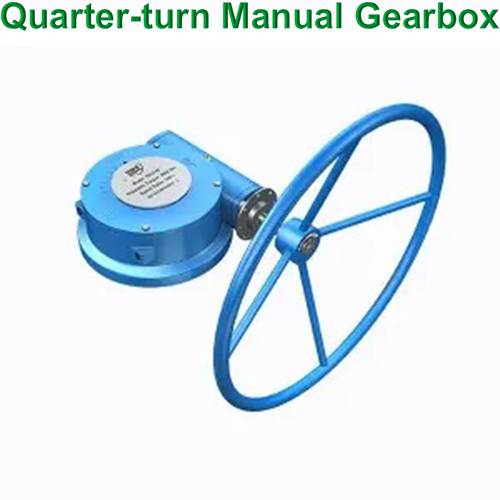 Gear Operation
 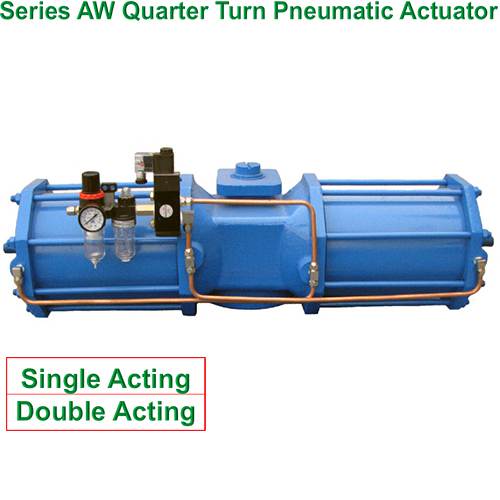 Series AW Pneumatic Actuator
  Series QF Electric Actuator
  Series QU Electric Actuator
  APL 210N Limit Switch Box
  APL 410N Limit Switch Box
  Solenoid Valve
  Solenoid Valve (ATEX)
  Solenoid Valve (ATEX + H2)