
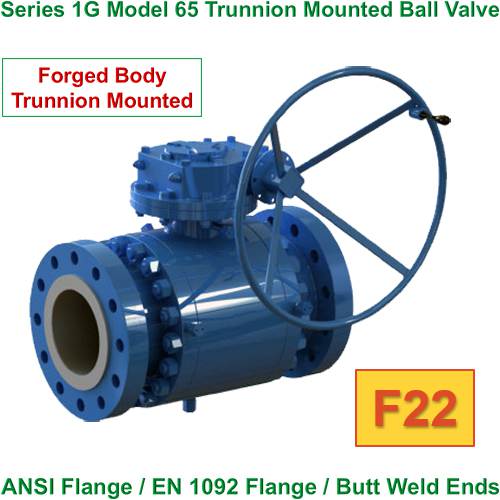
F22 (EN 1.7380) is a low-alloy, heat-resistant chromium-molybdenum steel. This valve maintains its structural strength and creep resistance at temperatures up to 600°C, and exhibits extremely high resistance to hydrogen degradation and high-temperature hydrogen erosion within a temperature range of 500°C.
F22 valves exhibit excellent allowable stress performance in the 450-540℃ range, making them a classic material for subcritical thermal power systems.
F22 valves demonstrate good resistance to high-temperature hydrogen-induced cracking (HIC) and hydrogen embrittlement, and are widely used in hydrogenation plants.
With a Cr content of 2.25%, F22 valves exhibit better resistance to H₂S sulfide corrosion than F11, but weaker than F5 (5Cr-0.5Mo).
When the operating temperature of F22 valves exceeds 540℃, their creep strength rapidly decreases, therefore they cannot be used in supercritical units.
In high-temperature, high-concentration H₂S media, the sulfide corrosion rate of F22 valves is higher than that of F5 valves, and strong corrosive media can cause oxidation-sulfide cross-corrosion.
When the operating temperature of F22 valves exceeds 550℃, the high-temperature oxidation rate increases significantly.
① Main steam pipelines of subcritical units;
② Subcritical boiler systems with steam temperatures ≤ 540℃;
① Inlet and outlet of hydrogenation reactors, high-temperature hydrogen-containment pipelines;
② Hydrocracking, residue hydrogenation, high-temperature and high-pressure hydrogen environment;
High-temperature and high-pressure hydrogen-containing process pipelines;
High-temperature process steam systems with temperatures between 480-540℃;
① When the medium contains a high concentration of H₂S: F5 valves should be prioritized, and F22 valves are not recommended;
② When the medium has strong sulfide corrosion: F5 valves should be prioritized, and F22 valves are not recommended;
③ When the temperature is >540℃: F91 valves should be prioritized.
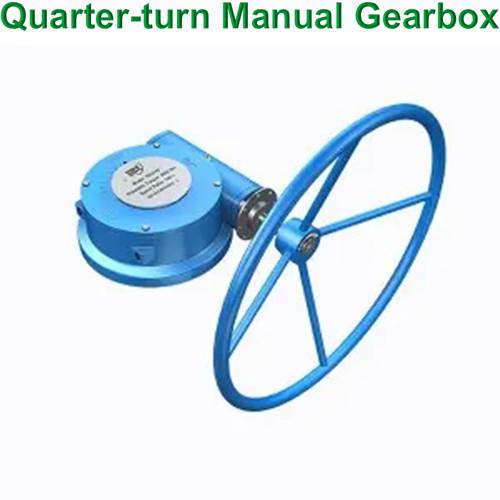 Gear Operation
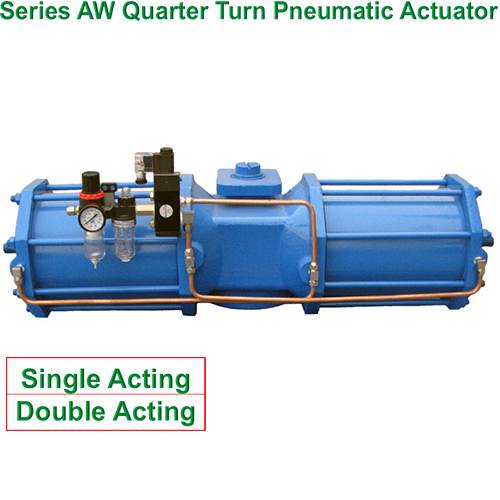 Series AW Pneumatic Actuator
 Series QF Electric Actuator
 Series QU Electric Actuator
 APL 210N Limit Switch Box
 APL 410N Limit Switch Box
 Solenoid Valve
 Solenoid Valve (ATEX)
 Solenoid Valve (ATEX + H2)